

Travel incident management: A guide for businesses
Published: Aug 25th, 2026
Key takeaways:
- What it is. Travel incident management is how a company prepares for, responds to, and recovers from anything that disrupts a business trip, from a canceled connection to a medical emergency overseas.
- Who's responsible. The duty to protect traveling employees sits with the employer, not the airline, hotel, or booking tool.
- Why it matters. A documented plan is both a safety measure and a liability shield, and it keeps operations running when disruption hits.
- What a strong program includes. Seven pieces: a clear policy, pre-trip risk assessment, traveler tracking, a named crisis team, reliable two-way communication, tiered response procedures, and a post-incident review.
- The benchmark to aim for. How quickly you can locate and confirm the safety of every affected traveler.
- Where to start. Align with ISO 31030 and lean on a travel management company for the capability, and an unpredictable risk becomes a process you can budget for.
A flight gets grounded. A storm closes an airport. An employee wakes up sick in a city where they don't speak the language. In every one of those moments, every leader asks the exact same two questions: where are our people, and are they okay?
Travel incident management is how your company answers fast, every single time, without anyone having to invent a process on the fly. For finance, HR, and operations leaders at growing businesses, it's the line between a controlled response and a group chat full of question marks.
This guide covers what travel incident management is, why it sits squarely on your desk as an employer, and how to build a plan that holds up when things get interesting. You'll get a seven-step framework, a tiered response model, and a plain-English breakdown of ISO 31030:2021, the international standard for travel risk management.
Whether you send people on 20 trips a year or 2,000, the goal doesn't change: protect your travelers, protect your business, and keep everybody moving. And if you want to go deeper on the paperwork side, our guide to how to build a travel risk management policy pairs nicely with this one.
What is travel incident management?
Travel incident management is the process a company uses to prepare for, respond to, and recover from events that disrupt business travel. It covers everything from flight cancellations to medical emergencies and security threats. The goal is refreshingly simple: keep traveling employees safe, and keep the business running while you do it.

Think of it as the operational layer inside your broader travel risk management program. Risk management is the strategy you write down in a calm conference room. Incident management is what kicks in at 2 a.m. when a traveler texts, "hey, something's happened."
An "incident" covers a lot of ground. On the mild end, it's a delayed flight and a missed dinner reservation. On the serious end, it's a natural disaster, a medical emergency, or a security situation that requires getting someone out of a country quickly. The discipline exists to shrink the gap between "something happened" and "our travelers are safe and supported" from hours down to minutes.
The part that trips most people up: good incident management is proactive, not reactive. Nearly all of the work happens long before anything goes wrong, which is exactly why the companies that handle disruption gracefully tend to look like they got lucky. They didn't. They prepped.
What the process includes
- Prepare: Risk assessment, traveler communication, pre-trip briefings, and a documented incident response plan.
- Detect: Real-time alerts and traveler tracking that flag when someone may be affected.
- Respond: A crisis management team, clear escalation paths, and 24/7 access to real support.
- Recover: Rebooking, evacuation if needed, a post-incident review, and traveler follow-up.
Want the fuller picture on protecting people on the road? Our corporate travel safety guide walks through the whole thing.
Stay in the loop.
The world of corporate travel is always changing. Sign up for newsletter and never miss a beat.
Why does travel incident management matter for business leaders?
Travel incident management matters because the responsibility to protect traveling employees sits with the employer, not the airline, hotel, or booking tool. A strong program reduces legal liability, protects your people, and keeps operations running when disruption hits. For leaders, it turns an unpredictable risk into a managed, budgeted process.
The stakes look different depending on which seat you're in.
-
For the C-suite

C-suite
An unmanaged incident is a continuity and reputation problem. Liability exposure, interrupted operations, and the questions that follow all land on your desk at once. One badly handled incident can undo a lot of careful work, and it tends to be remembered long after the flights are rebooked.
-
For finance
Finance
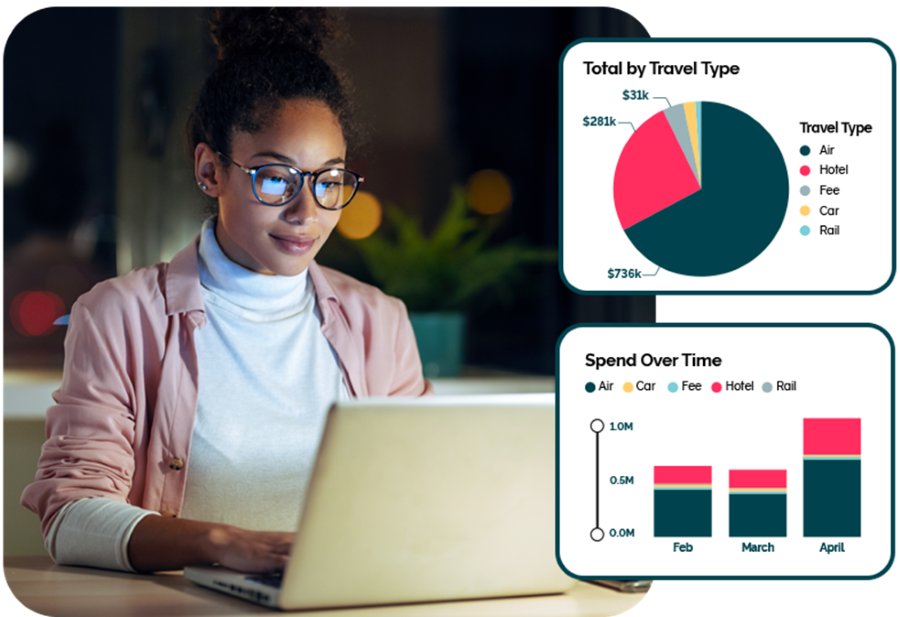
It's the spend nobody forecast. Walk-up fares on last-minute rebookings, duplicate accommodation, canceled meetings that still cost what they cost, and productivity quietly draining away while someone sits in an airport. One badly handled incident can cost more than a year of running the program properly.
-
For HR and operations
HR and operations
It's whether people feel safe enough to keep saying yes to travel. Employees notice how a company behaves when something goes wrong, and they talk about it. Traveler willingness is a retention issue wearing a logistics costume.
The concern is climbing industry-wide, too. In the Global Business Travel Association's January 2026 poll of 571 travel professionals across 40 countries, employee safety ranked as a top-three concern for travel buyers at 56%, behind affordability at 70% and the ease of obtaining entry and exit permissions at 65%. That middle figure matters more than it looks: GBTA notes that tightening cross-border requirements pose a risk to employee willingness to travel at all. Border friction is quietly becoming an incident category of its own.
What's at stake
| Risk if unmanaged | Who it affects | Business impact |
| Slow response to an emergency | Traveling employee, HR | Harm to staff; reputational and legal exposure |
| No visibility into traveler location | Operations, crisis team | Can't confirm who is safe; delayed decisions |
| Ad hoc, undocumented response | C-suite, legal | Inconsistent handling; weaker duty of care defense |
| Disruption with no rebooking support | Finance, traveler | Lost productivity; unplanned cost |
Incidents in travel have a habit of becoming liabilities, and liabilities have a habit of trickling into every department that touches a traveler. Our duty of care essentials breakdown goes further on the obligation itself.
What's the difference between travel incident management, duty of care, and travel risk management?
Duty of care is the obligation, travel risk management is the program, and travel incident management is the response. Duty of care is your legal and moral responsibility to protect traveling staff. Travel risk management is the ongoing system that fulfills it. Incident management is what happens the moment a specific trip goes wrong.

Three terms, endlessly swapped, quietly different. Worth 30 seconds to get straight, because the distinction shows up in legal exposure.
The cleanest way to hold it in your head is as a chain of questions. Duty of care answers why do we have to do this. Travel risk management answers what do we have in place.
Incident management answers what do we do in the next 10 minutes.
They aren't competing frameworks, and skipping any layer weakens the other two. A gorgeous policy document with no response capability is theater. A responsive team with no documented policy is a group of heroes improvising, which works right up until the day it doesn't and someone asks to see the paperwork.
| Term | What it is | When it applies |
| Duty of care | The employer's legal and moral obligation to protect travelers | Always, before, during, and after every trip |
| Travel risk management | The ongoing program of policies, tools, and processes | Continuously, across the whole travel program |
| Travel incident management | The response to a specific disruptive event | The moment an incident occurs, through recovery |
What types of incidents should companies prepare for?
Companies should prepare for four categories of travel incident: disruptions, health emergencies, security threats, and environmental events. Each carries a different severity level and a different response. Preparing across all four, rather than only the worst-case scenarios, is what makes a travel incident management plan practical instead of theoretical.

Most incidents your team will ever face are the low-drama, high-frequency kind, and the numbers back that up. Nearly one in four business trips change after booking, and Corporate Traveler's U.S. team handled close to 9,000 disruptions in 2025 alone, saving clients roughly 17,000 hours in the process. Spread that across a travel program of any size and you're looking at a steady drip of Level 1 incidents all year long. Our free SME guide to business travel disruption management digs into what's driving the trend and what disruption really costs once you look past the rebooking fee.
High-severity events are the opposite: rare, and demanding of the fastest possible response. Plan for both ends. A program built only around worst-case scenarios will leave your travelers stranded at gate B14 with nobody answering, and a program built only around rebooking will freeze when something serious happens.
The useful exercise is mapping your own travel footprint against these four categories. Where do your people go? A team flying regularly into hurricane-season destinations has a different profile than one doing day trips between Chicago and Denver.
| Category | Examples | Typical response |
| Disruption | Flight cancellation, delay, missed connection | Rebooking and proactive communication |
| Health | Illness, injury, medical emergency | Locate traveler; connect to care; assistance provider |
| Security | Civil unrest, protest, terrorism, theft | Assess safety; relocate or extract as needed |
| Environmental | Severe weather, natural disaster, outbreak | Track affected travelers; alert; adjust itineraries |
For a closer look at the security side specifically, our short guide to corporate travel security has you covered.
How do you build a travel incident management plan?
Build a travel incident management plan in seven steps: set a policy, assess risk before each trip, enable traveler tracking, define a crisis management team, create clear communication channels, document response procedures by severity, and review after every incident. Align the plan with ISO 31030 so it holds up to scrutiny.
That last point about scrutiny deserves emphasis, and so does this one: you don't need an in-house security department to pull any of this off. Small and mid-sized businesses often assume incident management is enterprise-only territory, reserved for companies with a global security operations center and a logo on the wall. It isn't. A travel management company supplies most of the capability, and the rest is a set of decisions you make once and write down.
The seven-step framework
- Set a clear policy: Document your organization's commitment to traveler safety and make this travel policy easy to find, ideally living where people already book. Define who is responsible and what travelers can expect before, during, and after a trip.
- Assess risk before travel: Evaluate destination threats and traveler-specific factors ahead of departure. Flag high-risk or out-of-policy trips for review so problems get caught while they're still cheap to solve.
- Enable traveler tracking: Use technology that shows where travelers are at any given moment. Real-time visibility is what lets you answer "who is affected?" in minutes instead of working the phones for three hours.
- Define a crisis management team: Name the people responsible for managing emergencies and set their roles, decision authority, and escalation paths. Everyone should know who does what before an incident, not during one.
- Create reliable communication channels: Set up multiple ways to reach travelers, with backups for when the primary channel fails. Two-way matters here, because travelers need to report concerns as much as you need to push alerts.
- Document response procedures by severity: Tier your response so the reaction matches the event (see the model in the next section). This removes guesswork and speeds up decisions when the pressure is on.
- Review after every incident: Debrief what happened and what could be better. Feed the lessons back into your policy, training, and procedures so next time is smoother than this time.
Where the plan lives matters as much as what's in it
A plan hidden away in a shared drive nobody can find is a plan that doesn't exist. Put it where your travelers already are. The Melon platform keeps bookings, traveler profiles, policy, and support in one place, which beats stitching together four systems and hoping they talk to each other.
It also handles a good chunk of the incident management work for you. Steps three through six of the framework above stop being projects and start being features:
- Traveler location tracking, so "where are our people?" takes seconds instead of a morning of phone calls.
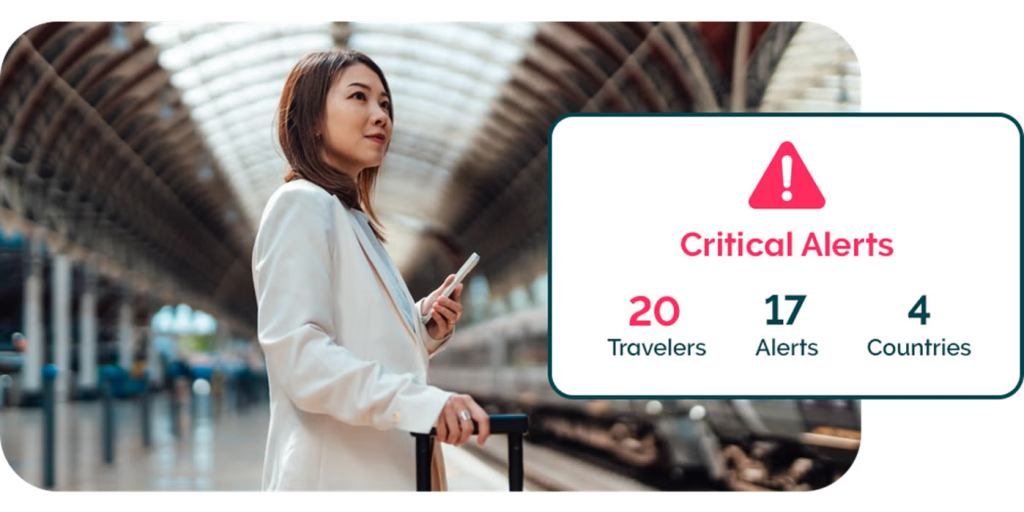
- Instant risk alerts for weather, security, and health, which covers three of the four incident categories on their own.
- Complete itinerary visibility and a duty of care dashboard built for HR, so the people responsible for travelers can see everything without chasing forwarded confirmation emails.
- Crisis protocols and escalation paths ready to activate, which means your Level 3 response is written down well before anyone needs it.
- Disruption alerts that reach travelers directly, so the person sitting at the gate hears it from you first.
That's the gap between having a plan and having a plan that runs itself. Take a tour of Melon and see what your travel program looks like when everything lives under one roof.
What are the benefits of travel incident management?
Travel incident management protects your people, reduces legal liability, and keeps your business running through disruption. It gives leaders real-time visibility into where travelers are, speeds up emergency response, and builds employee confidence in travel. Done well, it turns an unpredictable risk into a managed, defensible process.
Every benefit below maps to a business priority you're already tracking, which is why this is an easier internal sell than most people expect.

- Stronger duty of care: Meets your legal and moral obligation to protect traveling employees.
- Faster emergency response: Locate and support affected travelers in minutes rather than hours.
- Real-time visibility: Always know who's traveling and who may be affected by an incident.
- Reduced liability: A documented, consistent response strengthens your duty of care position considerably.
- Business continuity: Operations keep moving when disruption hits.
- Traveler confidence: People travel more willingly when support is one tap away.
- Cost control: Proactive rebooking and fewer scrambles mean less unplanned spend.
Our traveler safety services cover how this works in practice.
How fast should a company respond to a travel incident?
Response speed should match incident severity. A canceled flight can be handled in minutes through rebooking, while a security event or medical emergency demands an immediate, coordinated response from a crisis team. The benchmark that matters most is how quickly you can locate and confirm the safety of every affected traveler.
That benchmark is not a stopwatch number. If your honest answer involves a spreadsheet, a few emails, and a hopeful wait, there's work to do.
A tiered model is the practical answer to "how fast," because it strips the decision-making out of the moment.
| Level | Example | Response |
| Level 1: Disruption | Flight cancellation or major delay | Advisor manages rebooking and keeps the traveler informed |
| Level 2: Localized incident | Security alert, protest, or nearby natural disaster | Make contact, assess safety, coordinate next steps (relocate or depart early) |
| Level 3: Major crisis | Medical emergency or widespread security event | Crisis team coordinates medical care, local authorities, and extraction |
What a Level 2 response looks like in practice
Picture this. Civil unrest breaks out in a district of a city where you have three employees, and it's 4 a.m. where your head office is.
Without a plan, the morning goes like this: someone eventually sees the news, someone else starts calling around HR to figure out who's even in-country, and nobody has current hotel addresses because two of the three booked outside the system. First contact happens around lunchtime. The company finds out its people are safe roughly seven hours after it should have.
With a plan, a location-based alert fires automatically and flags exactly which three travelers sit inside the affected radius. Their travel manager makes contact within minutes, confirms all three are safe, and moves one traveler whose hotel is closest to the unrest. By the time your leadership team wakes up, there's a summary waiting: who was affected, who's been contacted, what's been changed, and what happens next.
Same event. Same three people. The only variable is whether the system was built before it was needed.
Speed only counts if a human picks up
This is where a lot of programs quietly fall apart. When an emergency hits, your traveler doesn't want hold music, a queue behind 400 other people whose flights were also canceled, or a support line that closes at 6 p.m. local time.

Corporate Traveler runs 24/7 support staffed by travel managers who know your business and your policy, rather than an outsourced call center working from a script. Someone who can rebook the flight, find the hotel, and tell your traveler exactly what happens next. Without that, employees end up stranded and you end up holding the liability. Our business travel services are built around exactly this.
What is ISO 31030 and how does it relate to travel incident management?
ISO 31030:2021 is the international standard for travel risk management. Published in September 2021, it gives organizations of any size a structured way to build, run, and review a travel risk program, including incident response. It's built on ISO 31000 and aligns with ISO 45001, which makes it the recognized benchmark for best practice.
Nobody reads a 48-page ISO standard for pleasure, so the short version follows.

According to the standard's official ISO listing, it applies to any type of organization regardless of sector or size, covering commercial businesses, nonprofits, government bodies, NGOs, and educational institutions. So the "we're too small for this" argument doesn't survive contact with the actual document.
One nuance worth knowing before someone on your board asks. ISO 31030 is guidance, not a certifiable management-system standard. You cannot get certified against it, and any vendor implying otherwise is worth a follow-up question. What you can do is align your program with it, which signals real maturity to your board, your insurer, and anyone who ever asks how you handle traveler safety.
What ISO 31030 covers
- Policy and program development
- Threat and hazard identification
- Risk assessment
- Prevention and mitigation strategies
- Ongoing evaluation and review
If you're using the standard as your blueprint, our travel risk management policy resource is a practical starting point for the documentation side.
What role does a travel management company play in incident management?
A travel management company supplies the tools and people that make incident management work: traveler tracking, real-time alerts, 24/7 support, and a team that responds when trips go wrong. The duty of care obligation stays with the employer, but a TMC is what lets a growing business meet it without building a security function from scratch.
That division of responsibility is worth being precise about. No travel management company can take your legal obligation off your hands, and you should be skeptical of anyone who implies otherwise. What a TMC does is deliver the capability, which for most SMEs would be wildly expensive to build in-house.
How a TMC supports incident management
- Traveler tracking and alerts so you always know who's affected.
- 24/7 human support by phone, email, and in-app chat, when it matters most.
- A single source of truth with bookings, profiles, and emergency contacts in one place.
- Proactive disruption handling with rebooking and communication before travelers even ask.
- Expert guidance on building and reviewing your travel risk management plan.
Technology finds the problem, people solve it
The model that works is hybrid. Software is excellent at flagging that a traveler sits inside the affected radius of a storm. It is considerably less good at getting that traveler onto a different flight and into a hotel that has actual availability at 11 p.m. on a Friday.
Nobody can promise you a year with zero incidents. That's not how travel works. What Corporate Traveler can promise is a dedicated travel manager and a customer success team who take the proactive steps that prevent a lot of incidents outright, then minimize the damage from the ones that slip through anyway. Before the trip, during the trip, and after it.
If you want the deeper playbook on the disruption side of the equation, our free SME guide to business travel disruption management covers the hidden costs your spreadsheet isn't capturing, the policy levers that protect your budget, and how predictive technology is catching disruptions before they land. Our wider resource hub is stocked with more where this came from.
Ready to build a plan you can actually rely on?
Your travelers deserve better than a hold queue and a shrug. Let's put together a travel incident management plan that works when you need it, backed by real people who pick up the phone at any time.
Book a meeting and we'll show you how it works.

FAQs
-
Who is responsible for travel incident management?
The employer carries it. Even when a travel management company provides the tracking, alerts, and around-the-clock response, the duty to act on a traveler's behalf can't be outsourced along with the booking. Your TMC supplies the capability; accountability stays in-house, which is precisely why the plan needs to be yours.
-
Does travel incident management apply to domestic trips?
Yes. Incidents happen on domestic travel too: flight cancellations, severe weather, medical emergencies, and local disruptions. A good plan covers every trip, domestic and international, because your duty of care applies the moment an employee travels for work, regardless of destination.
-
How is travel incident management different for small businesses?
The obligation is identical; the resources aren't. Small and mid-sized businesses rarely have an in-house security team, so they rely on a travel management company for tracking, alerts, and 24/7 response. That gives growing companies enterprise-grade incident support without building the function internally.
-
What tools do I need for travel incident management?
At minimum: traveler tracking to locate people, real-time alerts to flag risks, reliable two-way communication, and 24/7 access to support. Consolidating these into one platform, rather than juggling separate systems, is what lets you respond quickly and confidently when something happens.
-
How often should a travel incident management plan be reviewed?
After every significant incident, and at least once a year regardless. Post-incident debriefs surface what worked and what didn't, while the annual review keeps policies, contacts, and procedures current as your travel program, destinations, and team change.
-
Is ISO 31030 certification required?
No. ISO 31030 is guidance, not a certifiable management-system standard, so there's no formal certification to chase. Aligning your program with it still demonstrates maturity, supports your duty of care position, and gives you a recognized framework to build and review against.
Related resources


