
Key business travel routes to and from California
Published: Nov 6th, 2026
Key takeaways:
- Los Angeles to San Francisco is the busiest domestic route in the country, with about 370,000 scheduled seats in October 2026, and New York JFK to LAX ranks third, according to OAG.
- Five of the 10 busiest U.S. domestic routes start or end in California, so California business travel routes show up all over the national top 10, including LAX to Chicago O’Hare and O’Hare to SFO.
- Nonstop flight times run from about 1.5 hours between LA and the Bay Area to 11 to 17 hours to Asia, with New York at 5 to 6 hours and Texas at 3 to 4.
- Uber, Lyft, and taxi pickups at LAX happen at the LAX-it lot, which you can reach by free shuttle or on foot.
- Pre-booked, permitted car services can meet travelers at the terminal curb, which beats a shuttle ride after a long flight.
- LAX is roughly 17 to 19 miles from downtown Los Angeles, and the drive can take 60 to 90 minutes depending on traffic.
- All LAX terminals connect airside, so a traveler at a domestic gate can reach the Tom Bradley International Terminal lounges without clearing security again.
- The SkyLink people mover is not open yet, and LAX currently projects January 2027.
- LAX and SFO dominate California airports for business travel, accounting for about 76% of booked travel value across six California airports in Corporate Traveler’s data.
California does not do small business trips. Whether you’re flying to a client dinner in Manhattan or a supplier meeting in Tokyo, the state gives your team plenty of ways to get there. The busiest business travel routes from California run in every direction: up and down the state, across the country to New York and other big U.S. hubs, and over the Pacific and the Atlantic to the places where deals get signed.
LAX and SFO work as two-way gateways for all of it, sending California companies out into the world and welcoming the world’s business travelers back in. Having two major gateways plus a strong bench of secondary airports is great for Travel Managers planning business travel from California, because every route comes with choices. It also means the airport you pick can matter as much as the airline. Pick well and you save an hour. Pick badly and you get to know the 405 a lot better than you planned.
To show how those choices play out on California business travel routes, we added numbers from Corporate Traveler’s own bookings, so you can see where our clients fly. Along the way, this blog covers the routes, the airports, and the LAX details that keep a business trip on schedule.
California’s main airports for business travel
LAX handles the most business traffic in Southern California, and SFO leads in the Bay Area. OAG ranks LAX fifth and SFO sixth among all U.S. airports by scheduled seats in October 2026, and Corporate Traveler’s bookings tell a similar story. Across the six California airports for business travel in our August 2025 to July 2026 data, SFO and LAX together made up about 76% of booked travel value. SFO edged ahead on total spend at $34.3 million, while LAX won on trip volume with more than 37,000 transactions. San Diego took third at $11.7 million, comfortably ahead of Sacramento, San Jose, and Oakland.
Smaller airports earn their keep, too. Depending on where your meeting is, Burbank, Long Beach, John Wayne, San Jose, and Oakland can save you serious time. If you live or work nearby, expect shorter security lines and less time on the ground. Think of them as the express lanes only some travelers know about.
The table below sorts out nine California airports for business travel and what each one does best.
| Airport (code) | Region | Best for |
| Los Angeles International (LAX) | Southern California | The everything airport: international connections, nonstops to most U.S. hubs, and Westside and Silicon Beach meetings |
| San Francisco International (SFO) | Bay Area | Financial District meetings and long-haul flights to Asia and Europe |
| San Jose Mineta International (SJC) | Bay Area | Silicon Valley campuses in San Jose, Santa Clara, and Sunnyvale, minus the SFO detour |
| Oakland International (OAK) | Bay Area | East Bay business and domestic fares that go easy on the budget |
| San Diego International (SAN) | Southern California | Biotech, defense, and downtown San Diego meetings |
| Hollywood Burbank (BUR) | Southern California | Studio and media work in Burbank, Glendale, and Hollywood |
| Long Beach (LGB) | Southern California | The Port of Long Beach, logistics, and South Bay business |
| John Wayne (SNA) | Orange County | Irvine and Orange County corporate offices |
| Sacramento International (SMF) | Northern California | State government and public-sector meetings |
International trips explain much of the LAX and SFO dominance. About 48% of LAX’s booked value and 42% of SFO’s came from international travel, compared with 22% at San Diego and 3% at San Jose. Together, LAX and SFO captured about 90% of the international booked value across those six airports. If your passport is coming along, you’re probably flying out of one of these two.
Stay in the loop.
The world of corporate travel is always changing. Sign up for newsletter and never miss a beat.
Choosing your departure airport
Your starting point decides your airport more than your destination does. A team in Irvine heading to New York has little reason to fight its way to LAX when John Wayne is a short drive away, and a Silicon Valley executive flying to Chicago may find San Jose far easier than SFO. Pick your home airport first, then compare nonstops.
LAX, Burbank, Long Beach, or John Wayne?
LAX wins on international flights and the widest choice of nonstops. If your trip ends across the Pacific or the Atlantic, odds are good it starts here.
Burbank, Long Beach, and John Wayne win on speed. Security lines are shorter and ground time is lower, as long as you’re based near them. Hollywood Burbank suits studio and production travel, because it puts you close to the 101 and 134 freeways and skips much of the LAX crowd. Long Beach suits port, logistics, and South Bay business, and John Wayne saves Orange County teams in Irvine a long haul up the freeway.
The rule of thumb is simple. For a domestic hop from near a smaller airport, take the shorter drive and the shorter line. Your Tuesday morning will thank you. Teams managing travel across Los Angeles can mix both, depending on the trip.
SFO, San José, or Oakland?
SFO is the pick for long-haul flights and premium cabins. It is the Bay Area’s main gateway to Asia and Europe, so if your itinerary crosses an ocean, start here.
San Jose is the better call when your meetings are in the South Bay or at a Silicon Valley office, since the airport sits about 3.9 miles from downtown San Jose, per Team San Jose. It also has nonstop service to Tokyo, which helps teams that work with partners in Japan. Oakland earns its spot for East Bay business and value-minded domestic fares, and it gives you a second option when SFO schedules or fares don’t line up.
Compare all three before you book any Bay Area trip, because a fare difference can be worth a short drive.
Popular business travel routes from California
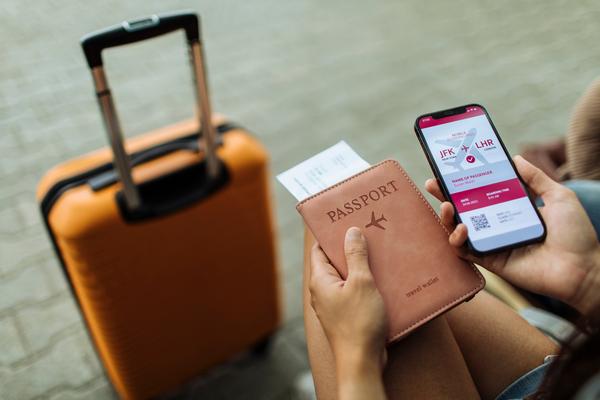
Los Angeles to San Francisco is the busiest domestic air route in the country, with about 370,000 scheduled seats in October 2026, up 28% from a year earlier, according to OAG. It has company. New York JFK to LAX, LAX to Chicago O’Hare, Las Vegas to LAX, and O’Hare to SFO also made the top 10, so five of the nation’s 10 busiest domestic routes start or end in California. OAG measures scheduled seats in both directions rather than passengers.
All those seats are chasing meetings. The table below maps the seven corridors behind the major business travel routes from California, and the sections after it break down each one. Flight times are approximate and vary by direction, airline, and weather.
| Route | Main California airports | Approx. flight time | Why businesses fly it |
| LA to the Bay Area | LAX, BUR, SNA, and LGB to SFO, SJC, and OAK | About 1.5 hours | Tech and finance teams bouncing between offices and client sites |
| LA or SF to New York | LAX and SFO to JFK and EWR | About 5 to 6 hours | Finance and media teams with client meetings to win |
| California to Texas | LAX, SFO, and SAN to DFW, IAH, and AUS | About 3 to 4 hours | Energy, tech, and regional headquarters visits |
| California to Chicago | LAX and SFO to ORD | About 4 hours | Corporate headquarters and consulting engagements |
| California to Seattle | LAX and SFO to SEA | About 2 to 3 hours | Tech and cloud company partnerships |
| California to Asia | SFO and LAX to HND, NRT, ICN, TPE, and SIN | About 11 to 17 hours | Tech supply chains, manufacturing, and trade |
| California to Europe | LAX and SFO to LHR, CDG, and FRA | About 10 to 11 hours | Finance, entertainment, and enterprise sales |
Within California: LA, the Bay Area and San Diego
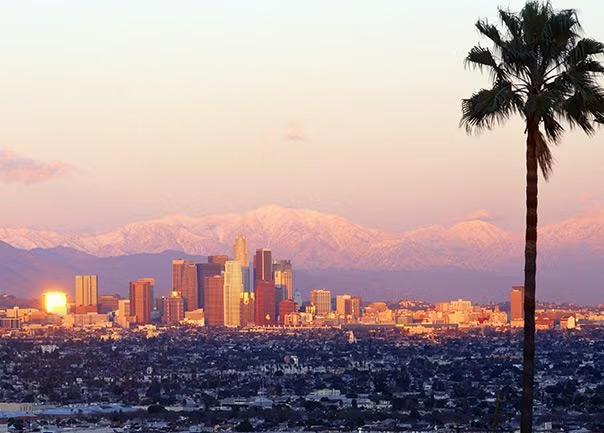
Some of the major business travel routes in California never leave the state. LAX to SFO runs with shuttle-style frequency, which is a polite way of saying the next flight is rarely far off. The trip takes about an hour and a half, so a morning meeting in San Francisco and dinner back in Los Angeles is a realistic plan. In Corporate Traveler’s bookings, SFO and LAX were the top two destinations from the West Coast airports we tracked, at $8.5 million and $7.4 million in booked value.
Secondary pairs keep the corridor flexible. Burbank to San Jose, John Wayne to SFO, and San Diego to SFO all come up often, and LAX to Sacramento is a regular for government work. Whichever pair you pick, the airports on each end can matter more than the airline. Landing at SJC puts you close to a Santa Clara campus, while landing at SFO can add a 30- to 45-minute drive to the South Bay, per Team San Jose, which is enough time to rehearse your pitch twice.
California to New York and the East Coast

New York JFK to LAX ranks third among the busiest U.S. domestic routes, with about 310,000 scheduled seats in October 2026, per OAG. It also topped the list for all of 2025, with 3.43 million seats, up 9% from the year before, according to OAG’s year-end release. From the Bay Area, SFO flies to both JFK and Newark. Premium transcontinental cabins are offered on these routes, which is worth a look for anyone who needs to land ready for a meeting.
Our bookings point the same way. JFK and Newark together accounted for about $7.6 million of booked value from the West Coast airports we tracked, roughly 7% of the total, and Boston added $3.7 million on its own. For travelers heading to New York, JFK and Newark give you two airports to choose from, so check which one is closer to your first meeting.
Plan for the three-hour time difference. An eastbound red-eye saves you a hotel night but costs you the first morning, so decide which one matters more for that trip.
California to Texas
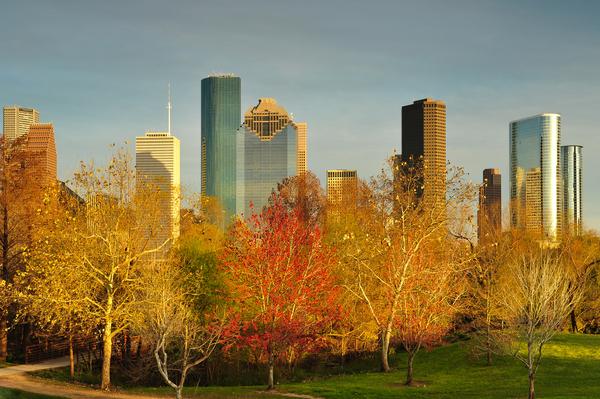
Dallas, Houston, and Austin are all about three to four hours by nonstop from LAX, SFO, and San Diego. A growing number of California companies have opened second offices or moved their headquarters to Texas, so business travel from California to Texas is growing too, with leaders checking in on the new office and teams shuttling between the two.
DFW and IAH are hub airports, so nonstops fill up on peak days. Book early if your dates are fixed, because a full flight to Dallas does not care how important your meeting is.
California to Chicago and Seattle

LAX to Chicago O’Hare and O’Hare to SFO are both top-10 U.S. domestic routes in OAG’s October 2026 data, and LAX to O’Hare grew 31% year over year, the fastest growth among the top 10. Corporate headquarters and consulting engagements keep the Midwest on many calendars.
Seattle is the main Pacific Northwest tech partner market, about two to three hours from LA or San Francisco. It ranked third among all destinations in our bookings at $5.1 million, behind only SFO and LAX, and the short flight makes same-day trips to Seattle doable.
Chicago in winter loves a delay, so build a backup flight into your travel policy, especially for California business travel routes that touch O’Hare. A snowstorm should not cancel your client meeting.
California to Asia

SFO and LAX are the main U.S. gateways to Asia, and SFO to Taipei ranks among the 10 busiest international routes in North America in OAG’s October 2026 data, with Seoul Incheon to LAX on the same list. Tokyo is the classic pick, with both Haneda (HND) and Narita (NRT) in play, while Seoul (ICN), Taipei (TPE), and Singapore (SIN) cover most of the other business destinations.
Business travel from California to Asia comes with real friction. Flights run 11 to 17 hours, and the time difference can reach 16 or 17 hours depending on the city and the time of year. Schedule a recovery day, because your body clock will not respect your calendar invite. Check entry rules well ahead, too, since some countries require a visa or an electronic authorization before you board.
California to Europe
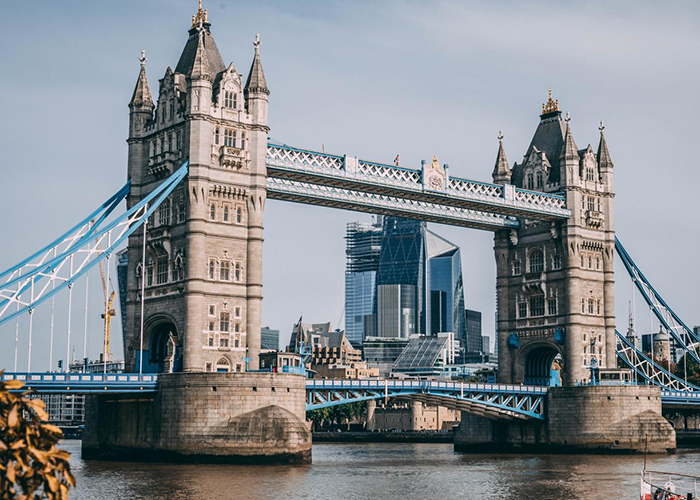
LAX to London Heathrow ranks fourth among North America’s busiest international routes in OAG’s October 2026 list, which makes it a backbone of business travel routes from California to Europe. SFO to Heathrow, Paris Charles de Gaulle (CDG), and Frankfurt (FRA) are the other main connection hubs for California travelers heading to Europe. London also stood out in our bookings, making up more than 11% of booked value on trips into the major West Coast airports we tracked.
The UK now requires an electronic travel authorization (ETA) for most U.S. visitors, so apply before you fly. The EU’s ETIAS is still on the horizon: the official ETIAS site says it is not in operation yet and that the start date will be announced several months ahead. Check both before you book.
Departing from LAX: What business travelers should know
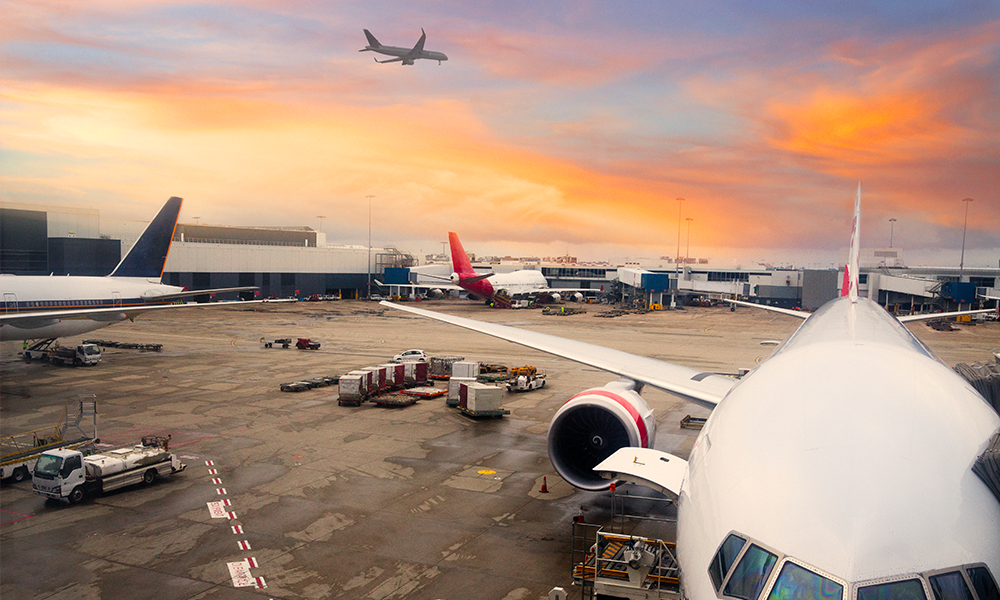
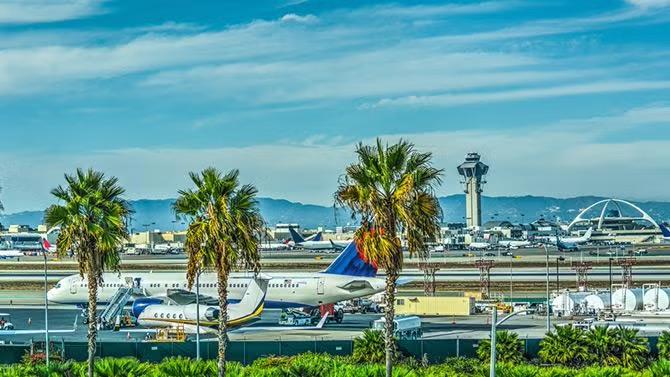
Most long-haul trips from Southern California start at LAX, so the time it takes to get there and through it shapes your whole itinerary. LAX is big, busy, and under construction nearly all the time, so a little prep goes a long way.
Uber, Lyft, and taxi pickups happen at the LAX-it lot, next to Terminal 1. Reach it by free shuttle from the arrivals level or on foot, per LAX’s ground transportation page, though the walk gets longer from the far terminals. Pre-booked, permitted car services can meet you at the terminal curb, which makes them a good fit for executives and anyone on a tight schedule.
Heading downtown? LAX is roughly 17 to 19 miles from downtown Los Angeles, and the drive can take 60 to 90 minutes depending on traffic. The SkyLink people mover is planned to link the terminals, parking, rideshare areas, rental cars, and the Metro system, but its opening keeps slipping. NBC Los Angeles reports that LAX currently projects January 2027. Until then, the shuttles carry the load.
| Option | Where you meet it | Best for |
| Uber or Lyft | LAX-it lot (free shuttle or walk) | Solo travelers with flexible timing |
| Taxi | LAX-it lot (a few other designated taxi spots exist) | Travelers who would rather skip the app |
| Pre-booked car service | Terminal curb or meet-and-greet | Executives, tight schedules, and groups who like a driver waiting |
| Rental car | Consolidated rental car facility (ConRAC), via shuttle | Multi-stop days across LA |
| FlyAway bus | Blue FlyAway columns on the lower level | Trips to Union Station downtown or Van Nuys |
| Metro rail | LAX/Metro Transit Center, via free shuttle | Light luggage and offices near rail lines |
Working at LAX before a long-haul flight

Long layover and a laptop? LAX has you covered: all terminals connect airside, so you can walk from a domestic gate to the Tom Bradley International Terminal (TBIT) lounges without clearing security again, according to The Points Guy. Give yourself extra time, since the walk between far-apart terminals can be long.
Outside the lounges, TBIT and other modernized terminals offer open seating with built-in power outlets and table space, so your inbox has somewhere to live. LAX also offers free Wi-Fi in the public areas of all terminals, with a short ad before each session, and gate charging keeps the “my battery is at 4%” meeting off your calendar.
The buffers below are your cheat sheet for the day. The two-hour and three-hour arrival times match guidance from Discover Los Angeles.
| Situation | Recommended buffer |
| Domestic departure | At the terminal two hours before departure |
| International departure | At the terminal three hours before departure |
| Driving to LAX at weekday peak | Add 30 to 45 minutes to your map app’s optimistic estimate |
| First meeting after landing | No sooner than two to three hours after scheduled arrival |
| Major events (Olympic build-out, big games, and holidays) | Add another 30 to 60 minutes and a little patience |
How Corporate Traveler supports California business travel
Booking a flight from LA to San Francisco is easy. Managing business travel from California across every route in this guide is the hard part. Corporate Traveler supports more than 400 California businesses with a dedicated travel manager who learns your team, your policies, and your budget.
If a flight is canceled at LAX, your travel manager takes over the rebooking, and support picks up 24/7 by phone, email, or chat. Our Melon platform puts flights, hotels, and ground transportation in one place, so a trip with a Burbank studio meeting, an Irvine dinner, and a red-eye to New York lives in one itinerary instead of five confirmation emails. Travel policy and spend reporting sit in the same platform, so finance sees spend as it happens.
Our Southern California team works from Culver City, Pasadena, and Irvine, so the person planning your pickup has sat in the same traffic. We share what we learn from running trips every day in our resource hub, from city guides to California business travel routes like the ones above.
Ready to simplify your business travel?
Whether you’re booking your first flight out of Burbank or managing a team that practically lives at LAX, Corporate Traveler can help with bookings, travel policies, traveler support, and spend management for every trip to and from California. Talk to us, and we’ll handle the airports, the traffic, and the red-eyes while you focus on the meeting.

FAQs
-
What are the busiest business travel routes from California?
The busiest business travel routes from California connect Los Angeles with San Francisco, New York, and Chicago. OAG ranks LAX to SFO as the top U.S. domestic route, and JFK to LAX, LAX to O’Hare, and O’Hare to SFO also make the top 10. Internationally, LAX to London and SFO to Taipei are among North America’s busiest.
-
What is the busiest flight route in the US?
Los Angeles to San Francisco is the busiest domestic flight route in the U.S. In October 2026, OAG counted about 370,000 scheduled seats between LAX and SFO in both directions, a 28% increase from October 2025. New York LaGuardia to Chicago O’Hare ranks second, and JFK to LAX ranks third.
-
Which California airports offer international flights?
LAX and SFO offer the most international flights from California, with nonstops across Asia, Europe, and beyond. San Diego adds nonstops to London, Amsterdam, and Munich, and San Jose has nonstop service to Tokyo. Airlines add and drop international routes often, so check current schedules for other airports.
-
How long is a flight from Los Angeles to New York?
A nonstop flight from Los Angeles to New York takes about five to six hours. Westbound flights usually run a bit longer than eastbound ones because of headwinds. Add the three-hour time difference, and a morning departure from LAX lands in New York in the afternoon.
-
Are there nonstop flights from California to Texas?
Yes. LAX, SFO, and San Diego all have nonstop flights to Dallas-Fort Worth, Houston, and Austin, and each trip takes about three to four hours. DFW and Houston Intercontinental are major airline hubs, so nonstops can fill up on peak days. Book early if your travel dates are fixed.
-
Which California airport is best for flights to Asia?
SFO is the best California airport for flights to Asia in most cases, thanks to its long-haul network and premium cabins, with LAX a close second. Both serve Tokyo, Seoul, Taipei, and Singapore, and SFO to Taipei is among North America’s 10 busiest international routes. Check nonstop options for your specific city before choosing.
-
How long is a flight from San Francisco to Tokyo?
A nonstop flight from San Francisco to Tokyo takes about 11 hours. Flights to Haneda and Narita are similar in length, and the return flight is usually shorter, closer to 10 hours. Tokyo is 16 to 17 hours ahead of California depending on the time of year, so schedule a recovery day before your first meeting.
-
Which California airports have nonstop flights to Europe?
LAX and SFO have the widest choice of nonstops to Europe, including London, Paris, and Frankfurt. San Diego also offers nonstops to London, Amsterdam, and Munich. Airlines add and drop European routes often, so check current schedules before you book.
-
Do US business travelers need an ETA to visit the UK?
Yes, in most cases. U.S. citizens visiting the UK for business, tourism, or family for up to six months need an electronic travel authorization (ETA), and each traveler needs one, including children. GOV.UK lists the fee at £20. Apply through the official GOV.UK service before you fly.
-
Are there shuttle services between California airports?
Dedicated shuttles between separate California airports are limited. At LAX, free shuttles link the terminals and the Metro Transit Center, and FlyAway buses connect LAX with Union Station and Van Nuys, per LAX. For trips between airports, a rideshare or pre-booked car is usually the simplest option to schedule around a meeting.
-
Is it better to fly out of LAX or Burbank for business?
LAX is better for international trips and the widest choice of nonstops, while Burbank is better for studio and media meetings and many domestic trips. Burbank sits near the 101 and 134 freeways and often means less time at the airport. Compare nonstop options and drive times before booking.
-
Is San Diego International Airport good for business travel?
Yes. San Diego International sits close to downtown San Diego, so meetings in the city center are a short ride away, and it offers nonstop service to dozens of destinations. It ranked third among California airports for business travel in Corporate Traveler’s bookings, with about $11.7 million in booked value.
-
How early should I get to LAX for a business flight?
Plan to be at the terminal two hours before a domestic flight and three hours before an international flight, as Discover Los Angeles advises. If you’re driving at weekday peak times, add 30 to 45 minutes to your map estimate. During major events and holidays, add another 30 to 60 minutes.
-
Where do you get an Uber or Lyft at LAX?
Uber and Lyft pickups at LAX happen at the LAX-it lot, next to Terminal 1. Walk there or take the free LAX-it shuttle from the arrivals level, outside baggage claim, where you will see green LAX-it signs, per LAX. Request your ride in the app once you are on your way.
-
How can Corporate Traveler manage business travel to and from California?
Corporate Traveler manages California business travel with a dedicated travel manager, 24/7 support, and one booking platform for flights, hotels, and ground transportation. We handle rebooking when plans change, keep trips on policy, and give you real-time visibility into spend. Our Southern California team works from Culver City, Pasadena, and Irvine.
Related resources


