

Business travel hotel guide for the Tri-State Area
Published: Sep 29th, 2026
Key takeaways:
- The right hotel for corporate travel is the one closest to the meeting with the most competitive room rate.
- New York City doesn't have one "best" business district, so the right neighborhood depends entirely on where your meetings, offices, and events are.
- North Jersey spans several distinct business areas, from Jersey City's Manhattan-adjacent skyline to Newark's airport access and the Meadowlands' event scene.
- Stamford and greater Fairfield County give companies a lower-cost, well-connected base within commuting distance of Manhattan.
- Airport hotels suit early flights and overnight layovers, while business district hotels suit multi-day trips packed with meetings.
- Companies can cut hotel costs by negotiating rates, capping nightly spend, and booking ahead instead of scrambling at the last minute.
- A preferred hotel program turns scattered bookings into real leverage, using travel data and traveler feedback to lock in properties that earn their spot.
- Corporate Traveler simplifies Tri-State hotel bookings with centralized rates, policy controls, and support that sticks around after checkout.
The Tri-State Area is the corner of the map where New York, New Jersey, and Connecticut come together, and where business travelers land more often than almost anywhere else in the country. If you're managing travel for employees, clients, or partners crossing this region, hotel choice isn't a small detail. Book the wrong one and you'll spend more time in a rideshare than in the meeting it was supposed to get you to.
This Tri-State area hotel article breaks down where to stay across all three states, matched to where the actual business is happening, plus how to keep your business hotels tri-state area program from draining the budget one "flexible" rate at a time. Hotel selection is one piece of the broader corporate travel planning puzzle, and often the piece with the most room for wasted money and wasted time.
Before diving into specific neighborhoods, it's worth setting the ground rules. Choosing the right hotel room that balances comfort, facilities and convenience is something that you must consider when staying away from home. Being in the right location is one thing, but finding a quality place to stay in the Tri-State area can ben a challenge for even the most experienced business traveler.
What should businesses consider when choosing hotels for corporate travel?
There's no universal "best" business hotel, but there are factors that separate a smart booking from a lucky guess. Before locking in a hotel for a Tri-State trip, travel bookers and travelers should:
- Check proximity to offices, client sites, and meeting locations first. A stunning hotel in the wrong zip code just means a longer, pricier commute.
- Confirm airport and rail accessibility, especially if the trip involves multiple stops.
- Lock in corporate or negotiated rates to keep nightly costs predictable across the whole travel program.
- Make sure the Wi-Fi and workspace setup can handle a real workday, not just a Netflix binge.
- Look for on-site meeting facilities if the team needs to run a session without leaving the building.
- Choose flexible cancellation policies, because business itineraries change more often than leisure ones ever do.
- Ask about early check-in and late check-out, especially for travelers running back-to-back schedules.
- Prioritize safety and a well-lit, well-located neighborhood, particularly for late arrivals or solo travelers.
- Take loyalty programs into account, since frequent travelers can stack real perks without breaking policy.
- Consider extended-stay suitability for longer projects or multi-week assignments.
A cheaper nightly rate farther from the meeting often costs more once rideshares, tolls, and an hour of lost work time get added in, which is exactly what trips up a lot of travel budgets. Total trip cost, not room rate alone, should make the call.
Stay in the loop.
The world of corporate travel is always changing. Sign up for newsletter and never miss a beat.
Where should business travelers stay in New York City?
NYC is big enough that "the best area for business travel" can feel like a trick question. It genuinely depends on where the meetings, offices, or events are happening, and how easily you can get between them. A trip built around Midtown client visits calls for a different hotel than one built around a Financial District closing. Here's how the major neighborhoods stack up.

-
Midtown Manhattan
Midtown is often the default answer, and it earns the reputation. It puts travelers within walking distance of Times Square, Rockefeller Center, Grand Central Terminal, and a dense cluster of corporate offices, with subway and rail lines running in every direction. It's the natural fit for meetings scheduled around Midtown East or the wider corporate corridor. The InterContinental New York Barclay and The Benjamin Royal Sonesta both sit close enough to Grand Central that "I'll just walk" is actually a realistic plan.
-
Flatiron and NoMad
Just south of Midtown, Flatiron and NoMad suit anyone with meetings around Midtown South and the tech and media companies clustered nearby. The area trades a bit of Times Square energy for a quieter, more residential feel, without losing subway access. INNSiDE by Meliá New York NoMad, Park South Hotel, and Hilton New York Fashion District all fit the bill.
-
Chelsea and Hudson Yards
This corridor is built for anyone arriving by rail or working near Hudson Yards offices. Its proximity to Penn Station and Moynihan Train Hall makes it especially convenient before or after an Amtrak or NJ Transit connection. Kimpton Eventi keeps travelers close to both Chelsea's office towers and the train, which counts for a lot on an early-morning departure.
-
Lower Manhattan and the Financial District
For meetings around Wall Street, the World Trade Center, or the broader Downtown business district, Lower Manhattan keeps travelers close without the Midtown crowds, a real plus for finance and legal trips especially. Hotel Indigo Lower East Side and The Beekman, a Thompson Hotel, both sit within easy reach of the Financial District's core.
Where should business travelers stay in New Jersey?
New Jersey covers a lot of ground for business travel, and hotels for business travelers in New Jersey range from Manhattan-view towers to airport-adjacent properties built for the 6 a.m. flight nobody wanted. The right base depends on whether the trip centers on New York City access, Newark Liberty International Airport, or a specific North Jersey business corridor.

-
Jersey City
Jersey City has graduated from "cheaper alternative to Manhattan" to a legitimate business address in its own right. Its skyline hotels put travelers minutes from Lower Manhattan by PATH train, alongside a growing base of local offices and meeting facilities. The Hyatt Regency Jersey City on the Hudson, Canopy by Hilton Jersey City Arts District, and Sonesta Simply Suites Jersey City cover most budgets and most views.
-
Newark
Newark business hotels earn their keep through sheer convenience, not charm. Newark Liberty International Airport connects directly to the Northeast Corridor rail line via the AirTrain monorail, and NJ Transit trains from Newark Airport Station reach New York Penn Station in about 30 minutes, per the Port Authority's airport transportation guide. That makes Newark a smart base for travelers flying in and out on tight schedules, and for teams doing business across the wider North Jersey corridor. DoubleTree by Hilton Newark Airport, DoubleTree Hotel Newark Penn Station, and TRYP by Wyndham Newark Downtown are the standbys here.
-
Secaucus and the Meadowlands
Secaucus and the Meadowlands work well for anyone heading to an event, conference, or meeting in that corridor. NJ Transit connects the area directly to Manhattan, and the local road network makes ground transportation straightforward for anyone driving in from elsewhere in New Jersey. Hyatt Place Secaucus/Meadowlands covers this stretch without asking travelers to detour.
Beyond these three areas, companies with a wider North Jersey footprint should also know Hilton Parsippany in Morris County, Hyatt Regency New Brunswick and Hyatt Regency Princeton in central New Jersey, and Garner Hotel Mahwah near the New York state line, all useful depending on where a specific client or office happens to sit.
Where should business travelers stay in Connecticut?
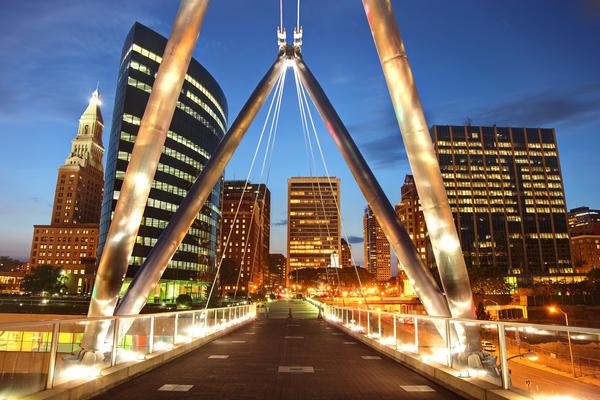
Hotels for business travelers in Connecticut cluster heavily around Fairfield County, thanks to its rail access into Manhattan and its density of corporate offices. Stamford business hotels lead the pack, but the surrounding towns hold their own too.
-
Downtown Stamford and the station area
Downtown Stamford is the easy pick for anyone doing business in Fairfield County with occasional trips into the city. The Stamford Transportation Center connects to Metro-North's New Haven Line and Amtrak, and the ride into Grand Central Terminal typically runs 45 to 65 minutes depending on the train, per MTA schedules. That's close enough for a same-day Manhattan meeting without giving up Stamford's own dining and office scene. The Lloyd Stamford, Tapestry Collection by Hilton, sits right in the middle of it all.
-
Other Fairfield County business hubs
Beyond Stamford, the rest of Fairfield County and its neighbors offer plenty of choices, depending on the meeting location, client office, or event, and how much driving versus rail access the trip requires. Hyatt Regency Greenwich sits near the Stamford border, about 40 minutes from New York City. EVEN Hotel Norwalk covers the Route 7 corridor. Farther out, Hilton Mystic handles eastern Connecticut business, while Cambria Hotel New Haven, Graduate New Haven, and Cambria Hotel South Windsor round out coverage near Yale and the Hartford area.
Make Tri-State business travel easier to manage
Juggling hotels across three states, half a dozen train lines, and a dozen different negotiated rates is a lot to keep straight without help. Corporate Traveler brings booking, transportation, and itinerary coordination together in one place, so a Jersey City stay and a same-week Stamford trip don't turn into two separate headaches.
Should business travelers stay near the airport or the business district?

This one comes down to the shape of the trip, not personal preference, so save the debate for something that matters. Airport hotels make sense for early departures, late arrivals, overnight layovers, short trips, or meetings happening right at the airport itself. Business district hotels make more sense for multi-day trips packed with meetings, client visits, or networking events, where being close to the office beats being close to the runway.
A hotel that looks airport-convenient on a map can still add 40 minutes once ground transportation and traffic patterns get involved, which is exactly where understanding major business travel routes across the Tri-State Area pays off. Either way, the decision should come back to total trip cost and traveler productivity, not just the nightly hotel rate. A slightly pricier hotel that saves an hour of commuting each day usually wins on the balance sheet, even if it loses on the invoice.
Should business travelers use one hotel or multiple hotels for a Tri-State itinerary?

Sometimes one hotel for the whole trip is the right call. Sometimes switching partway through saves real time and real money. The right answer depends on meeting locations, travel time between them, transportation costs, and how much disruption a mid-trip move genuinely causes. A traveler with three days of meetings clustered in Midtown should stay put in Midtown, full stop. A traveler bouncing between a Jersey City client and a Stamford client on the same trip might come out ahead by switching hotels partway through, rather than commuting an hour each way just to avoid one extra checkout.
How can companies control hotel costs for frequent business travel?

Hotel costs add up fast for companies with regular Tri-State travel, and the fixes are more about planning than penny-pinching. Preferred hotel programs, negotiated corporate rates, and nightly rate caps keep spend predictable. Booking in advance and choosing flexible rate types, instead of defaulting to the cheapest non-refundable option, protects against last-minute change fees that often cost more than the original savings. Consolidating hotel spend across a smaller number of properties also strengthens negotiating power and makes policy compliance easier to track.
Sneaky costs pile up in more places than the hotel folio. Unused cancellations, off-policy upgrades, and last-minute rate hikes are classic corporate travel budget leaks that inflate a hotel program's real cost well past the nightly rate.
None of this works if the focus stays on room rate alone. A cheaper hotel that adds an hour of ground transportation and pulls an employee off the clock isn't the bargain it looks like on paper, exactly the kind of trade-off the finance leader's guide to smarter business travel costs framework is built to catch.
How should companies create a preferred hotel program?

A preferred hotel program turns a company's travel history into leverage instead of a pile of unread expense reports. Start by pulling travel volume and frequently visited destinations to see where the real spend concentrates. From there, negotiate rates and amenities with the properties that keep coming up, factor in location relative to common meeting sites, and use traveler feedback alongside booking data to confirm the properties genuinely work for the people staying in them. A preferred list built on real data holds up a lot better than one built on guesswork or a single glowing review from someone's cousin.
How can Corporate Traveler help Tri-State businesses manage hotel bookings?

All of this, negotiated rates, preferred properties, policy compliance, gets a lot easier with the right partner behind it. Corporate Traveler centralizes hotel booking across New York, New Jersey, and Connecticut, applies preferred rates automatically, and keeps policy management and reporting in one dashboard instead of a dozen spreadsheets nobody wants to open. Traveler support extends beyond booking too, covering domestic and international accommodations and stepping in when plans change mid-trip. It's the kind of centralization that pushes many companies toward the real benefits of working with a travel management company instead of managing hotel bookings in-house, one email chain at a time.
Ready to simplify your business travel?
Managing hotels across three states shouldn't require three separate systems, three logins, and a shared spreadsheet named "FINAL_v3." Corporate Traveler handles end-to-end travel management for Tri-State businesses, from booking and negotiated rates to real support when plans change.
Book a meeting with Corporate Traveler and get your Tri-State hotel program sorted.

FAQs
-
How can business travelers get between New York City, New Jersey and Connecticut?
Rail is usually the fastest option. NJ Transit and PATH trains connect New Jersey hubs like Jersey City and Newark to Manhattan, while Metro-North's New Haven Line links Stamford and Fairfield County to Grand Central Terminal, typically in 45 to 65 minutes from Stamford. Amtrak also serves several of these same routes for travelers heading farther along the Northeast Corridor.
-
Which airport is most convenient for a Tri-State business trip?
Newark Liberty International Airport (EWR), John F. Kennedy International Airport (JFK), and LaGuardia Airport (LGA) all serve the region, and the best choice depends on the destination. EWR connects directly to the Northeast Corridor rail line, making it a strong option for trips into New Jersey or Manhattan's West Side. JFK and LGA both serve New York City directly and suit travelers whose meetings are concentrated in Manhattan.
-
What should companies do when hotel or transportation plans change during a Tri-State trip?
Book flexible rates where possible so changes don't trigger unnecessary fees, and keep a clear point of contact who can rebook quickly if a meeting moves or a train is cancelled. This kind of response falls under standard travel incident management, and companies with a formal process in place typically resolve disruptions faster than those improvising on the spot.
-
Are hotel meeting rooms or coworking spaces better for business meetings?
Hotel meeting rooms work well for client-facing meetings or events tied directly to a stay, since they keep everything in one location. Coworking spaces can be a better fit for teams that need a workspace across multiple days without booking a formal meeting room each time.
-
What amenities should I look for in a business hotel?
Reliable Wi-Fi, a proper desk or workspace, on-site meeting facilities, and flexible check-in and check-out times top the list. Proximity to transportation and a safe, well-located neighborhood matter just as much as anything inside the room.
-
How far should a business hotel be from a meeting location?
Aim for a 15 to 20 minute commute by foot, subway, or rail. That keeps travel time from eating into the workday, especially across multiple meetings in one trip, and it's a reasonable cutoff regardless of which part of the Tri-State Area the meeting is in.
Related resources


