

Corporate travel planning: A complete guide to optimize efficiency and savings
Last updated: June 17th, 2026
Key takeaways
- Manual trip booking costs about $50 and 50 minutes per reservation on average.
- Corporate travel planning spans eight steps, from policy creation to metrics monitoring.
- A strong travel policy defines booking procedures, preferred suppliers, and approval steps.
- Booking early and staying flexible are the top ways to control travel costs.
- Tracking spend, compliance, and leakage helps companies improve their travel programs.
Did you know that booking a standard trip could cost your company over $50 per reservation and nearly 50 minutes of time? Imagine reducing this to 4 minutes and saving around $18 per booking. For a company making 100 bookings per month, that's potential annual corporate travel savings of up to $21,000!
Better business travel planning creates a streamlined, cost-effective process that keeps your team focused on what matters - your business goals. Effective planning transforms what could be a logistical nightmare into a smooth, stress-free experience, allowing you to reclaim time, reduce costs, and enhance productivity.
This guide will cover everything you need to know, from improving efficiency to maximizing the value of your travel budget.
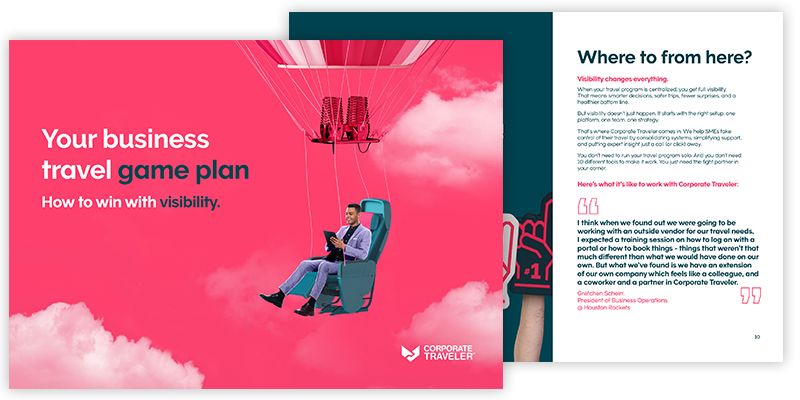
Whitepaper: Business travel game plan
Find out how to future-proof your corporate travel program
Whether you're planning to scale or maximize business travel savings, a consolidated travel setup helps you make better, faster decisions. Check out our whitepaper for actionable tips that you can use to improve your planning strategies and identify new opportunities for savings.
What is corporate travel planning?
Business travel planning involves a lot more than just organizational skills - it includes booking and managing your ongoing trips.
Flights, hotels, and transportation are just part of the equation. It also includes tracking and overseeing expenses, and ensuring traveler wellness and duty of care while they’re on the road.
This can be a lot to manage on your own, but with the assistance of a travel management company (TMC), like Corporate Traveler, you can start improving your travel planning strategies while also maximizing your business travel savings.
Step-by-step guide to corporate travel planning
To get the most out of your business travel, planning is critical. It stretches beyond flight and hotel booking - it’s about creating a strategy that aligns with your company's goals while controlling costs and ensuring a smooth travel experience.
Here are the eight essential elements of a successful corporate travel plan:
1. Understand the role of a corporate travel planner
A corporate travel planner, or designated Travel Manager, especially one from an established agency or TMC, is the mastermind who ensures every business trip runs smoothly. They're the ones who ensure your travel program is efficient, cost-effective, and that it stays in line with your company's policies.
Here's what they typically do:
- Craft itineraries: Plan every trip detail, from flights and hotels to ground transportation.
- Negotiate deals: Use industry connections to maximize corporate travel cost savings on travel services.
- Manage expenses: Monitor the travel budget, ensuring cost-effective bookings within guidelines.
- Handle disruptions: Provide backup plans to keep things on track during unexpected events.
- Ensure compliance: Make sure all bookings follow company policies and maintain consistency.
How a corporate travel planner simplifies group travel
When sending a team to a big conference, a corporate travel planner would handle everything - from booking simultaneous flights to reserving a block of rooms near the event venue.
They might also arrange shuttle services, ensuring seamless group movement. This coordination saves money through group bookings and allows the team to focus on the conference without worrying about logistics.
2. Create a comprehensive travel policy
A well-crafted corporate travel policy is essential for navigating business travel, keeping expenses in check, and ensuring employees understand expectations when they're traveling.
Here's what a comprehensive travel policy should include:
- Booking procedures: How, where, and when employees should book travel.
- Preferred suppliers: Specified airlines, hotels, and car rental companies.
- Expense guidelines: Clarification on covered expenses and what's off-limits.
- Approval process: Details on handling out-of-policy bookings and required sign-offs.
- Travel extensions and personal travel: Process for trip extensions and personal travel add-ons.
- Insurance and emergency procedures: Information on travel insurance and steps to take in emergencies.
When creating your policy, consider your business's specific needs. For instance, if your team frequently travels internationally, include sections on booking flights in advance to secure the best rates and tips for navigating foreign airports and customs.
For a smoother process, provide your employees with a clear, concise document that's easy to understand. Use bullet points, flowcharts, and a table of contents to make the policy more accessible. Remember, this isn't just about setting rules - it's about preparing your team to travel efficiently and with confidence.
To help you get started, we've created a customizable corporate travel policy template. Download it, tailor it to your team, and set your business up for travel success!
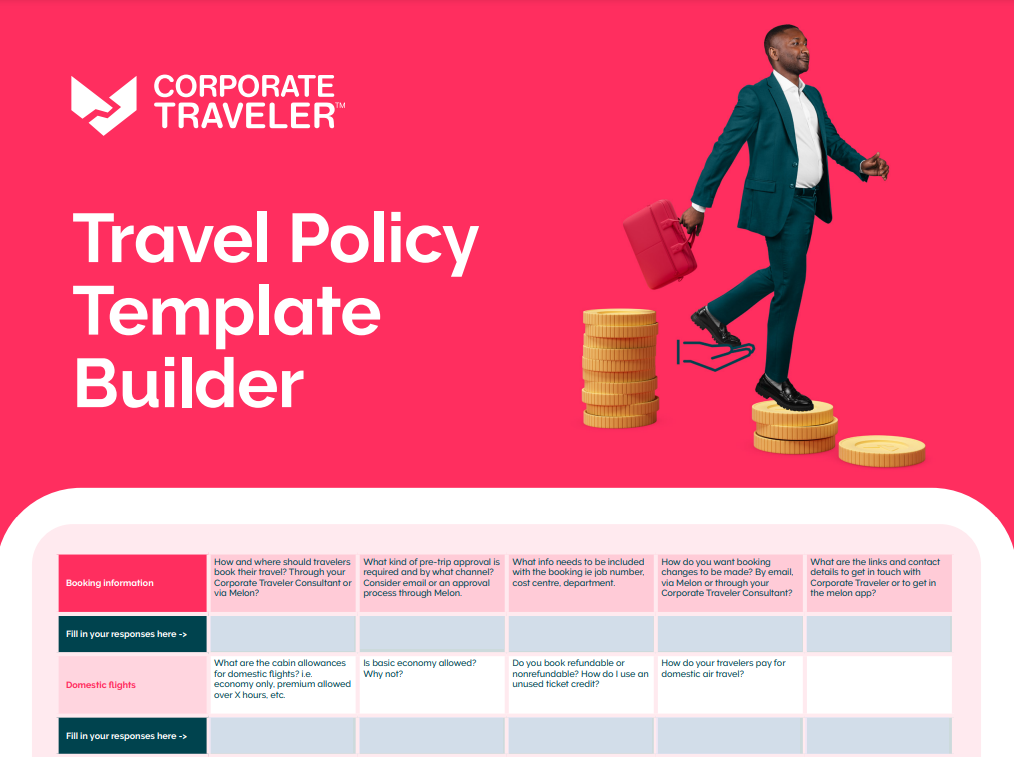
Download our FREE corporate travel policy template
Follow along with our corporate travel policy template as you read.
Since no two companies have identical travel needs, this guide will help you tailor a policy that’s designed to fit your organization, while maintaining the flexibility to manage the ever-changing travel landscape.
3. Choose the right travel management platform
Selecting the right travel management platform is critical in streamlining corporate travel. It should meet your specific needs and make life easier for everyone involved. Here are the key features to look for:
- User-friendly interface: Intuitive and easy to navigate.
- Comprehensive booking options: Covers all travel aspects with exclusive rates and discounts.
- Policy compliance: Automatically enforces your company's travel policies.
- Real-time data and reporting: Provides detailed reports on travel spend, compliance, and traveler safety.
- Traveler support: Offers 24/7 help for last-minute changes or travel emergencies.
- Integration with expense management: Seamlessly tracks bookings and reconciles expenses.

Melon: an all-in-one corporate travel platform
Melon is designed to be a one-stop shop for all your business travel needs. Its user-friendly interface makes booking effortless, and your team can lock in a flight, hotel, and car rental in minutes.
Melon's AI-driven "Recommended Spend" feature ensures bookings stay within policy. Plus, with real-time traveler tracking and 24/7 support, you'll always know where your team is and be able to respond.
Melon also integrates with major expensing platforms, which makes managing and reconciling travel expenses quick and painless. It's very useful for companies that want a comprehensive solution that covers every aspect of their travel management program.
When choosing your platform, consider your company's specific needs, evaluate your options, and select the one that best aligns with your goals. The right platform will make your travel program more efficient, save your team time, and ultimately, maximize your corporate travel cost savings.
4. Budgeting and cost management
Managing a business travel budget can be challenging. But with the right approach, you can control expenses and meet your team's needs. Here's how to set a travel budget and improve savings:
A) Start with a realistic travel budget
Analyze your company's past travel expenses, including flights, hotels, car rentals, and meals. This data allows you to forecast future costs and set a budget that covers your entire team's needs. Consider upcoming events, conferences, or seasonal spikes in travel that might require extra funds.
Pro tip: Regularly review and adjust your travel budget to align it with your evolving needs. This way, you can stay in control and prevent overspending.
B) Maximize your travel budget
Here are some strategies to get the most out of your travel spend:
- Reclaim unused credits: Track and reclaim refunds and travel credits to avoid wasting a significant chunk of your travel spend.
- Leverage global buying power: Using a TMC's global buying power can reduce your travel spend by [5% to 50%], which is especially beneficial for businesses with frequent travel needs.
- Implement dynamic budgeting: Adjust your budget based on real-time data and market conditions, allowing for flexibility in spending across different travel categories.
- Use expert advice: Travel consultants can negotiate corporate flight discounts you might not get otherwise - potentially improving business travel savings by up to 25%.
- Negotiate better rates: Ask for discounts on hotels and flights. A TMC can get exclusive rates that help you stretch your budget further. Just be mindful of travel management company fees as you evaluate the overall cost.
C) Control your budget with real-time expense monitoring
Using technology to monitor spending ensures that all costs align with your budget and comply with your travel policy. It also allows you to identify trends and areas where you might be overspending, so you can adjust your strategies as needed.
Pro tip: Combine your travel booking and expense tracking for easy management. Automate records, reduce errors, and save time.

Try our business travel calculator for smarter savings
Whether you're planning to scale the size of your company or tighten your corporate travel spend, a consolidated travel setup helps you make better, faster, more well-informed decisions. Check out our useful business travel calculator and start leveraging these savings opportunities for yourself.
5. Book and manage travel arrangements
Efficient booking and management of travel arrangements can save time, money, and reduce stress. Here's how to streamline the process:
A) Leverage technology and expertise
Utilize a travel management platform like Melon to search, compare, and book everything in one place. This centralization ensures you get the best rates, adhere to policies, and secure exclusive deals.
Partnering with a TMC like Corporate Traveler can further enhance your business travel savings through their negotiating power for exclusive rates.
B) Get the most value from every trip
- Book early and be flexible: Secure better rates and more options by booking in advance. Be open to off-peak travel days or times for potentially lower costs.
- Utilize corporate travel discounts and loyalty programs: Enroll your travelers in frequent flyer or hotel loyalty programs to accumulate rewards like discounted rates, upgrades, and priority services.
- Choose value-driven accommodations: Opt-in to corporate hotel rates, which often give you added perks like room upgrades, late check-outs, and access to exclusive amenities.
- Streamline ground transportation: Plan for rental cars or ride-share services to avoid last-minute stress and overspending.
Integrating these into planning your corporate travel management allows you to streamline the entire process, reduce costs, and drive efficiency.
6. Ensure traveler safety and compliance
Safety is a top priority in business travel. Here's how to safeguard your travelers, while also ensuring strict adherence to your travel policies:
A) Build a robust risk management strategy
Create a comprehensive strategy that covers everything from customs delays to unexpected emergencies in unfamiliar territories. Your risk management plan should:
- Outline guidelines for selecting safe travel services, especially in higher-risk regions.
- Provide a detailed emergency response plan, including immediate support contacts.
- Give travelers peace of mind to focus on their trip's purpose.
B) Integrate safety into your travel policy
Make safety an integral part of your travel program by providing clear instructions for every aspect of travel - from bookings to safety protocols.
For international travel, address specific requirements like travel insurance, emergency contacts, and guidelines that travelers can use to navigate high-risk areas.
C) Leverage technology for compliance
Embed your travel policy directly into your booking platform to make compliance effortless. For instance, Melon allows you to set up automated policy rules that guide travelers during booking.
Features like "Recommended Spend" help ensure travelers stay within their allotted budget, making compliance a natural part of the process.
D) Monitor, review, and update your corporate travel policy
Track compliance regularly to identify areas that need extra attention or clearer communication.
Review and update your travel policy at least once per year, incorporating feedback from travelers and staying current with industry changes. This process should involve finance, HR, and travel management stakeholders, so you can ensure alignment with company goals alongside the current travel landscape.
By staying proactive in policy updates and gathering employee input, you demonstrate your commitment to traveler safety and well-being, while maintaining an effective and inclusive travel program that your teams will love.
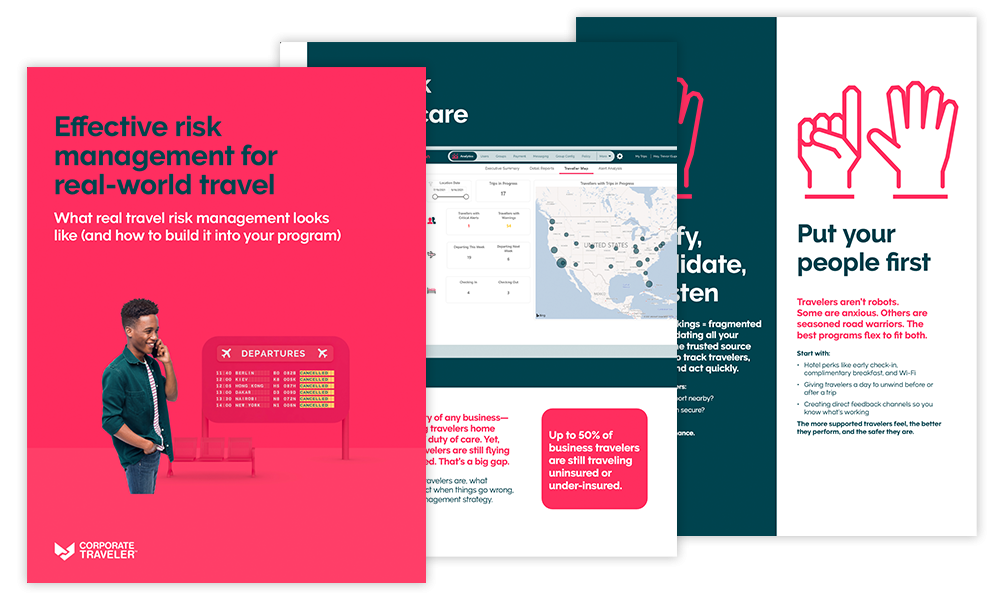
Download our Travel Safety Guide
Make safety inclusive for every traveler
Travel risks aren't one-size-fits-all. This travel safety guide covers how to create a business travel safety plan that supports every employee, no matter what their position or where they’re traveling.
7. Utilize technology to optimize your corporate travel process
The right technology can significantly streamline your corporate travel management process, from booking to reporting, saving you time and money. Modern travel management software handles everything - booking flights, managing suppliers, enforcing travel policies, and tracking expenses - all in one place.
These platforms are often available as mobile apps, providing convenience for travelers who need to book last-minute flights, or so they can easily adjust their itineraries on the go when changes are required.
Building a cohesive travel tech stack
To maximize efficiency, consider building a cohesive travel tech stack - a suite of interconnected software solutions that work seamlessly. This holistic approach allows you to streamline approvals, track your travelers, and maintain high levels of compliance.
For example, integrating a travel platform like Melon with any popular expense management system creates a comprehensive travel program that simplifies the booking process and provides greater visibility into your travel spend.
A key advantage of this integrated approach is centralized data management. With all your travel information in one place, you can easily spot trends, identify opportunities for savings, and enhance your travel program.
A Travel Management Company (TMC) can provide various tools to help you consolidate your reporting and expense management, giving you quick access to everything from travel expenses to carbon emissions tracking - all of which makes it easier to do strategic corporate travel planning for the future.
8. Monitor and analyze travel metrics
Monitoring your travel program's performance effectively involves tracking key metrics to make intelligent, informed decisions. Here are the essential metrics to focus on:
- Travel spend: Understand where your money is going and identify opportunities to reduce costs.
- Compliance rates: Measure how often employees follow the company's travel policy. High compliance rates indicate an effective and well-communicated policy.
- Booking leakage: Track the percentage of bookings made outside approved channels. Minimizing leakage leads to better control and cost management.
- Traveler satisfaction: Happy travelers are productive. Use surveys and feedback to understand how well your travel program meets employees' needs.
- Carbon emissions: Monitor your travel program's carbon footprint to measure environmental impact and identify ways to reduce it.
To streamline the process of collecting and analyzing travel data:
- Use centralized data management tools to consolidate all your travel data in one accessible hub.
- Leverage automated reporting to generate detailed, customized reports tailored to your specific goals.
- Utilize real-time data access to monitor travel spend as it happens, track traveler locations for safety purposes, and adjust travel policies on the go.
- Empower your team with predictive analytics that forecast trends and proactively decide about peak travel times and potential compliance issues.
- Conduct regular audits and reviews to ensure your travel program aligns with your company's goals.
By focusing on these critical metrics and utilizing tools that streamline data collection and reporting, you can gain valuable insights that drive better decision-making, optimize your travel program, and create a positive experience for your travelers - all while staying within budget and minimizing your company’s environmental impact.
Best practices for corporate travel planning
A few key practices can significantly improve your business travel planning. Let's break down some simple strategies that can streamline your corporate travel:
1. Plan ahead to secure better rates and reduce stress
Planning ahead is one of the most effective ways to keep your travel budget in check and avoid unnecessary stress. When you book flights, hotels, and transportation in advance, you often secure better rates and have more options.
This also helps ensure everything is in place to make the trip smooth and efficient. Early corporate travel planning allows you to lock in the best accommodations and avoid the last-minute scramble that can increase costs.
Planning your trips as early as possible saves money, and it gives your team peace of mind, knowing all the trip details are handled.
2. Stay flexible to navigate travel changes and costs
Even the best-laid plans can change, so flexibility is vital in corporate travel. Whether it's a sudden meeting change, flight cancellation, or an unexpected delay, having the ability to adapt can save time and money.
However, flexibility doesn't just apply to travel dates. It can also mean being open to alternative routes, airlines, or accommodations that may offer better rates.
Additionally, using a travel management platform that offers real-time updates and easy rescheduling options can be a lifesaver when plans need to change quickly.
3. Communicate clearly to keep travelers and teams aligned
Clear communication is the cornerstone of a successful travel experience. Ensure everyone involved, from the travelers to the admin team and travel managers, is aligned.
Before the trip, provide travelers with detailed itineraries, including booking confirmations, contact information, and any specific travel guidelines or company policies they must follow.
Use messaging apps, emails, or travel management tools during the trip to stay connected and quickly address any issues. Setting up an emergency protocol is also helpful, so travelers know who to contact and what steps to take.
By planning ahead, staying flexible, and communicating clearly, you can make corporate travel smoother, more cost-effective, and less stressful for everyone. These simple practices are the foundation of a well-run travel program.
Looking to make your business travel dreams take flight? We’ve got you.

FAQs
-
What is corporate travel planning?
Corporate travel planning covers everything involved in organizing business trips, including booking flights, hotels, and transportation, managing expenses, and ensuring traveler safety. It goes well beyond booking a flight; it's about building a repeatable process that supports company goals.
-
What are the key steps in planning corporate travel?
The main steps include defining the role of a travel planner, building a comprehensive travel policy, choosing the right management platform, budgeting effectively, booking and managing trips, prioritizing traveler safety, applying the right technology, and monitoring travel metrics on an ongoing basis.
-
How much can better travel planning actually save a company?
Booking a standard trip manually can cost over $50 per reservation and take nearly 50 minutes. Streamlining that process can cut it to a few minutes and around $18 per booking, which adds up quickly for companies making frequent trips.
-
What should a corporate travel policy include?
A strong policy outlines booking procedures, preferred suppliers, expense guidelines, approval processes, rules for trip extensions or personal travel, and instructions for insurance and emergencies. Clear, accessible language matters just as much as the content itself.
-
How do you measure whether a corporate travel program is working?
Track metrics like total travel spend, policy compliance rates, booking leakage (bookings made outside approved channels), traveler satisfaction, and carbon emissions. Reviewing these regularly helps identify where the program is succeeding and where it needs adjustment.