

Corporate travel savings guide: How to budget & save money on business travel
Last updated: June 12th, 2026
Key takeaways
- Rising travel costs are the top concern for 60% of business travel suppliers.
- TMCs, travel platforms, and supplier negotiations are the top three strategies for savings.
- Shifting flights from Friday to Wednesday can save around $35 per ticket on average.
- Carpooling for short commutes can save companies up to $81,000 across multiple employees.
Why business travel savings matter for growing companies
Rising costs are putting more pressure on travel budgets
With costs continuing to go up year-over-year, it’s more important than ever to find ways to maximize corporate travel savings. Managing travel costs isn't just about the money - it's about making intelligent, strategic choices that lead to efficiency gains. Think of it as an opportunity to get more bang for your buck, while keeping both your accountants and travelers happy.
What this guide will help you do
In this guide, we'll take you through innovative strategies to help your SME effectively manage and reduce your business travel costs. You’ll learn about budget control, how to optimize your policy compliance, ways to maximize your traveler experiences, and how to make the most of your analytic visibility.




1. Book in advance to lower trip costs
Dive into the key tactics to better utilize your corporate travel budget and save big.
Why advance booking saves money
You know the saying, "The early bird gets the worm"? Well, in business travel, the early bird gets the best deals. Booking at the last minute is like gambling with your company's budget. And trust us, the house always wins.
What happens when teams book too late
Nearly a quarter of business travelers (22%) overspend on travel simply because they wait too long to book. Office managers and assistants often get swamped with urgent tasks, leaving travel plans until the last minute when prices are sky-high.
But booking in advance avoids these high costs, unlocking opportunities for significant travel spend savings.
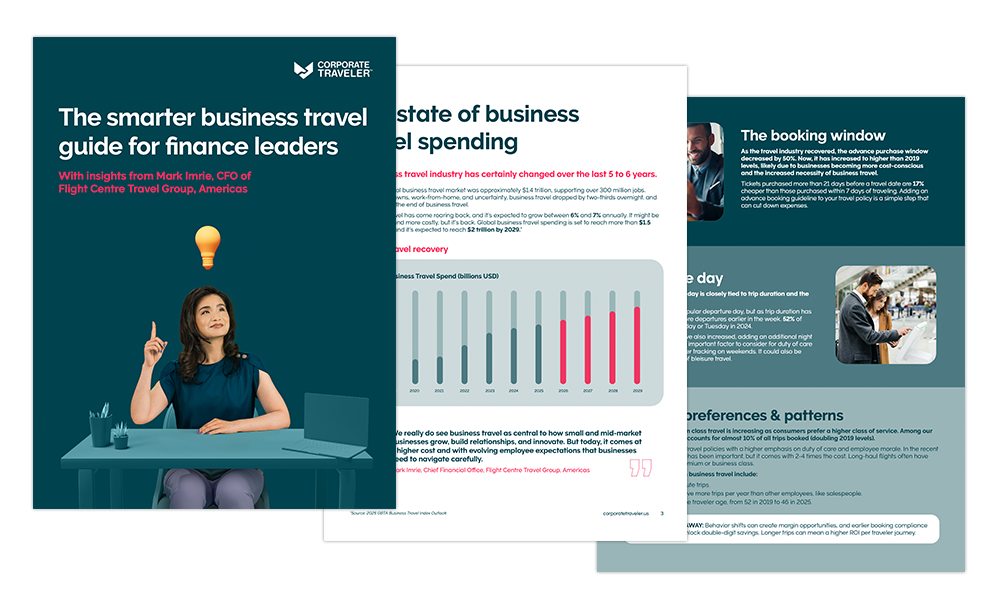
The data your travel budget wishes you had
Planning isn't just smart - it's essential. Early booking means lower prices, better choices, and more opportunities to maximize your travel budget. So, set reminders, get bookings in early, and watch the savings roll in.
This guide gives you the frameworks, benchmarks, and cost levers that turn "necessary expense" into "revenue driver" — with real numbers from 17,000+ companies and insights from Mark Imrie, CFO of Flight Centre Travel Group, Americas.
2. Use a travel management company to improve savings and control
What a TMC helps you manage
Missed connections, last-minute changes, and endless booking hassles can make you want to pull your hair out.
But imagine having a travel expert at your fingertips who takes the guesswork out of booking corporate flights, hotels, and transportation. This would leave you free to focus on the important stuff - like nailing that big presentation or closing a crucial deal.
TMCs can get you better rates on flights and hotels, provide comprehensive services, and ensure all travel is policy-compliant. Plus, they offer 24/7 support, so you've got someone to call when things go sideways at 3 AM.
While travel management company fees might seem like an extra expense, the savings and peace of mind they bring can far outweigh the costs.
Is it cheaper to book business travel independently or through a TMC?
If you find the right TMC, it should reduce your business travel costs over time. While there may be some noticeable immediate corporate travel savings, the real benefit comes in the long-term savings you’ll get by optimizing your travel program, closing spend leaks, and improving your expense visibility.
TMCs can also give you access to negotiated rates and global buying power, and offer you and your team more efficient travel support. Best of all, with the right travel tech, you can consolidate all your data into a single location, which makes it much easier to maximize the efficiency of your travel program.
3. Use a corporate travel platform for booking, policy, and reporting
Features that help reduce travel spend
Why should business travel be an exception in the age of smartphones and smart everything? Leveraging the right tech, from booking tools to expense management software, can save you time, money, and headaches.
These tools streamline the entire process, from booking flights and hotels to managing and tracking expenses. They provide real-time data and analytics, ensure policy compliance, improve approval workflows, and offer seamless integrations with your existing systems.
How travel technology improves compliance and visibility
Take Melon, our global digital platform that lets you search and book flights with just a few clicks. Melon gives you insider access to exclusive rates and deals, ensuring you always get the best prices.
Plus, Melon's comprehensive reporting tools help you track travel spend and maintain full policy compliance, making decision-making easier and more informed. It’s the secret weapon that powers all of Corporate Traveler’s tools.
Ramp is another excellent tool to have in your arsenal. Corporate Traveler integrates seamlessly with Ramp to serve its US customers. It automates travel expense management, making submitting receipts effortless.
With the right technology, you can automate mundane tasks, reduce errors, and closely monitor expenses.
4. Negotiate corporate rates with airlines, hotels, and suppliers
Use travel data to support negotiations
The magic of negotiating corporate rates with airlines and hotels is getting VIP treatment every time you travel, but without the VIP price tag. You want to go beyond just scoring corporate travel discounts to forging relationships that bring long-term savings.
Start by analyzing your travel data. Are your employees frequently flying to the same destinations or staying at the same hotel chains?
Use this data to your advantage. Approach airlines and hotels, and present the volume of business your company offers. Show them why giving you a discount is beneficial for both sides.
Building a strong relationship with your travel providers is critical. It's not just a one-time negotiation but an ongoing partnership. When you book consistently with the same airlines or hotels, they recognize your loyalty and might offer better rates or perks over time.
Ways to increase your negotiating power
Regularly communicating and being transparent about your travel needs helps maintain corporate connections. There are some tips we can offer to help reach successful negotiations and more potential savings.
Start by highlighting your travel volume. This makes it easier to establish long-term partnerships. It’s important to be flexible, but also try to bundle services when possible to get better negotiated corporate travel rates.
Don’t forget to utilize your loyalty programs, and if you really want to go to the table with the most support, consider partnering with a TMC that has experts who specialize in negotiating these types of deals.
Next time you're planning a business trip, channel your inner negotiator. By strategically negotiating corporate hotel rates, you can significantly reduce your accommodation expenses - all while ensuring your employees stay at comfortable, convenient locations.
5. Build flexibility into travel dates and itineraries
When flexible dates create savings
Alright, let's talk about flexibility. Business travel is full of curveballs, but embracing flexibility in your travel plans can help protect your budget.
Say your company needs to book a flight for an important meeting, but you're not locked into a specific date. Shifting your travel dates by just a day or two to do mid-week flights can unlock hidden savings. It’s like magic.
Flexible tickets allow you to change your travel dates, times, or even destinations without being forced to absorb the fees that airlines love to charge.
This is a lifesaver for business travelers, who often have to make last-minute changes. Are you all set for a Friday departure, but your client needs to reschedule? No worries! With a flexible ticket, you can adjust your plans at no extra cost.
Flexible fares vs. hidden change costs
Statistics show that departing mid-week can save you significant cash. A simple shift from Friday to Wednesday can save around $35 on average for flights. The same goes for hotels - opt for a Thursday check-in, rather than a Friday or Saturday, and you save an extra $60.
These small changes add up, leaving more room in your budget for other important things, like taking a potential client for a fancy dinner. A little flexibility and better monitoring of your business travel expenses goes a long way towards keeping your trips on budget.
6. Create a corporate travel policy that supports cost control
What a cost-conscious travel policy should include
A corporate travel policy is the cornerstone of efficient travel planning, ensuring all travel activities align with company policies and budgets. It needs to cover a wide range of different elements effectively, not just your booking rules (but those too).
It needs to include things like your approved tech stack, preferred suppliers, approval processes, your expense rules, as well as your insurance and emergency information. Otherwise, money could be slipping through the cracks, and you may not even realize it.
How policy improves compliance without slowing travelers down
When travelers are on the road, sudden changes can leave them stranded - especially when approval processes aren’t set up to let them automatically book alternative arrangements during disruptions.
By the same token, by setting up a thorough travel policy with automatic approvals, a disruption can be solved with a couple of quick clicks. Travelers keep moving, and you no longer have to worry about approval bottlenecks.
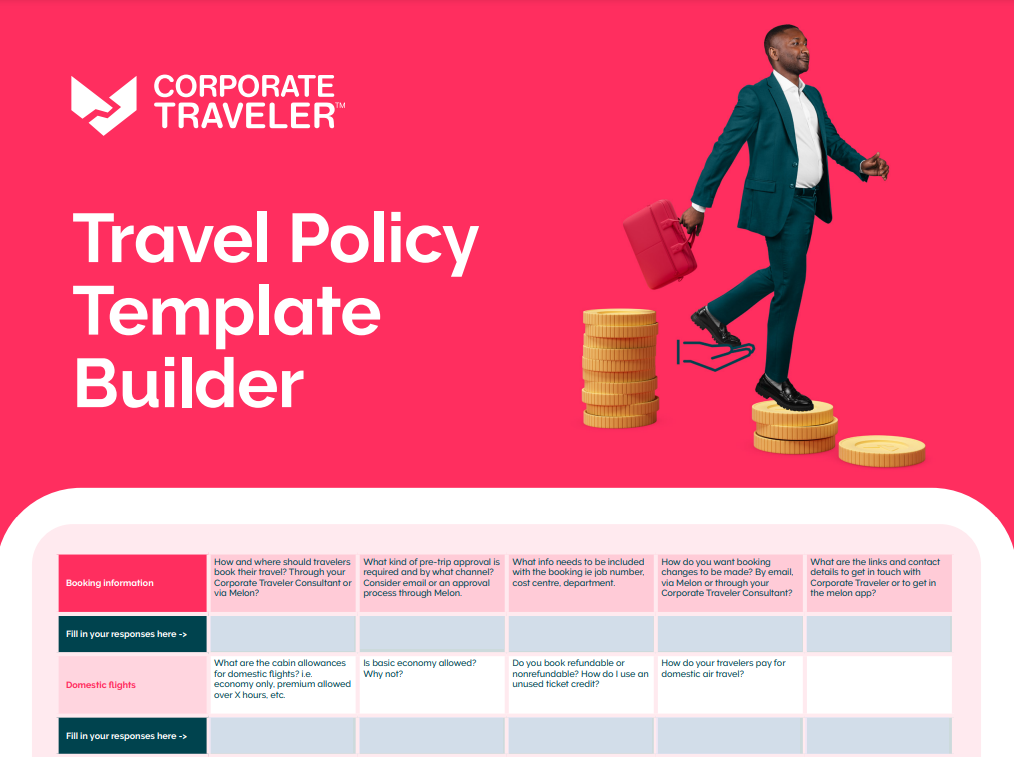
Free template:
Build your corporate travel policy
Check out our handy travel policy template builder. This tool will guide you step-by-step, helping you craft a custom policy that perfectly fits your company’s travel program.
Since no two companies have identical travel needs, this guide will help you tailor a policy that fits your entire organization, while adapting to the ever-changing travel landscape. Stop spend leaks and tighten up your compliance to start saving by creating your own custom corporate travel policy.
7. Monitor and analyze business travel expenses regularly
Keeping a close eye on travel expenses is essential. Regular tracking and reviewing business travel costs can reduce budget overruns, identify cost-saving opportunities, and ensure that every dollar spent is accounted for. It's about maintaining financial health and transparency, ultimately leading to more intelligent business decisions.
Why expense visibility matters
Without travel spend visibility, you could be wasting money on unnecessary expenses or missing out on potential savings. By regularly monitoring business travel expenses and using the right tracking and reporting tools, you can spot trends, adjust policies, and make strategic decisions that save you money.
How to track travel spend effectively
The key lies in using the right tools for expense tracking, and that’s where our travel platform, Melon, shines. Melon allows you to analyze your spend and save across the board - all from anywhere, on any device. Whether you're in the US, UK, or Canada, Melon is tailored to make life easier.
Melon’s smart policy tool lets you set and forget, guiding your travelers on where and what they can spend. Your personalized company dashboard adapts to changing market conditions, saving time for you and your bookers. With real-time data and insights, reporting becomes a breeze.
For US users, there's an added advantage - Melon integrates seamlessly with Ramp, a powerful expense management tool.
Ramp tracks every dollar spent in real-time, eliminating the hassle of lost receipts and outdated expense reports.
Imagine your top sales executive traveling across the country to close deals. With Ramp, they can snap photos of receipts and submit them instantly. Meanwhile, your finance team back at the office enjoys real-time access to all travel expenses, making end-of-month reconciliations effortless.
By leveraging tools like Melon and Ramp, you ensure that every travel dollar is spent wisely, ultimately keeping your budget in check and freeing up your team to focus on what they do best - driving business success.

Use a travel savings calculator to estimate opportunities
Corporate Traveler has a plethora of useful tools built into our platform, including a savings calculator that you can use right now to start estimating corporate travel savings opportunities for you, based on your existing travel program.
Want to know how much you could be saving in your current travel budget?
8. Use loyalty programs and preferred partnerships strategically
Where loyalty benefits can reduce total trip cost
Who doesn't love perks? Loyalty programs can be a goldmine for saving money and scoring sweet extras on business trips. Imagine earning miles for every dollar your company spends on flights.
Loyalty programs aren't only about saving a few bucks. They're about enhancing the travel experience with perks that make business trips more comfortable.
These perks could mean better seats on the flight, free room upgrades, early check-in or late check-out. All of these little added benefits can turn what would be an exhausting trip for travelers into a more enjoyable experience.
How to align loyalty strategy with company policy
Using a company policy to help build a loyalty strategy helps you keep control of your travel program and avoid missing out on perks when they’re available.
When you partner with a TMC to help oversee your loyalty programs and perks, you can cut out traveler fragmentation and siloed data that leads to wasted loyalty points and missed perks.
9. Reduce ground transportation costs where practical
Public transit isn't just for tourists with maps. For business travelers, the savings and benefits of using public or shared transport can be huge. Plus, it's a win for the environment.
Public transit, shared transport, and carpooling
Using public transit can significantly slash your expenses. No more sky-high gas prices or costly car rentals. It's a budget-friendly option perfect for businesses looking to trim costs.
For those commuting up to 12 miles, you could save about $1,600 per year by sharing rides. Go further, and the savings climb to $4,300. When you add it all up, the combined savings for multiple employees can be substantial - up to $81,000.
The environmental benefits can be substantial:
US public transit saves around 37 million metric tons of carbon dioxide annually. That's equivalent to the emissions from the electricity used by nearly 5 million households. Just imagine the impact if more businesses encouraged their employees to take public transport.
When lower-cost transport options make sense for business travelers
Imagine a scenario where your team frequently travels around town for meetings. Instead of everyone driving separately and dealing with parking fees, they could carpool using a ride-sharing service. This would cut down on travel expenses, encourage teamwork, and reduce the hassle of finding parking.
By encouraging public and shared transportation, you can cut down on ground transportation costs, while also taking steps towards better long-term travel sustainability. It’s a win for your bottom line and the planet.







Ready to reduce business travel costs?
Throughout this guide, we’ve covered everything from booking as early as possible to negotiating the best rates, and even encouraging the use of public transportation.
Proactive business travel expense management isn't just about saving a few bucks here and there. It's about creating a sustainable travel program that benefits your company, and your travelers, in the long run.
Implementing these strategies will optimize your travel budget and enhance your team's travel experience, boosting productivity and satisfaction - all while saving your team time and money.
Already have your template?
Reach out to Corporate Traveler and let us show you all the ways our expert blend of state-of-the-art travel tech and real human support can help improve your corporate travel program.
Related guides and tools for smarter travel savings


