
Major business travel routes throughout Washington state
Published: Nov 25th, 2026
Key takeaways:
- Most Washington business routes arrive or connect through Sea-Tac (SEA), which handled over 50 million passengers in 2024 and topped Nextiva’s 2026 ranking for business-traveler connectivity.
- Eastern Washington travel centers on Spokane International (GEG), served by eight airlines according to Visit Spokane, and Tri-Cities (PSC), with about a dozen nonstops, so many trips connect through Seattle.
- On Washington state business travel routes, I-5 and I-90 are the main driving corridors, with Seattle to Spokane about 4¼ hours by car, and ferries take vehicle reservations on only two routes, according to Choose Washington State and WSDOT.
- Snoqualmie Pass on I-90 tops out at 3,022 feet, and WSDOT recommends carrying chains and traction tires from Nov. 1 through March 31, so add buffer time or fly.
- Link light rail connects Sea-Tac to downtown Seattle in about 38 minutes, and the 2 Line now reaches Bellevue and Redmond, so pick rail, rideshare, or car service by meeting location and stops.
- Seattle and Tacoma are about 30 miles apart, so plan 45 to 90 minutes by car, while Seattle to Spokane is about an hour by air versus 4¼ hours by car, so flying wins most day trips.
- About 37% of Sea-Tac booking value in Corporate Traveler’s August 2025 to July 2026 data came from international trips.
- A travel management partner simplifies planning, booking, and duty of care, and Corporate Traveler adds 24/7 phone and live chat support plus traveler tracking through Melon.
Washington runs on two travel geographies, and the Cascade Mountains sit squarely between them. West of the range, Puget Sound's cities, ferries, and light rail form a tight network anchored by Sea-Tac. East of it, Spokane and the Tri-Cities trade that density for longer distances, fewer flights, and a lot more driving. Plan one trip across both and you're really planning two trips with a mountain pass in the middle.
That's why Washington state business travel routes reward a little homework. Statewide corridors like I-5 and I-90 link hub to hub, ferries connect the Kitsap and Olympic Peninsulas and the San Juan Islands, and mountain passes can rewrite an itinerary overnight. Getting around Washington state for business also means thinking past the state line, because the same trip might continue elsewhere in the U.S. or cross the border to Vancouver, B.C. in Canada.
This guide covers the airports, highways, ferries, and mountain passes that decide whether your 9 a.m. starts at 9 a.m. Use it to match each leg of your trip to the road, rail, or runway that fits, and to decide when flying beats driving. Pick your route, pad your buffer, and save the surprises for the team lunch. If you’re also sorting out where to sleep, our Washington state corporate hotel guide covers that half of the plan, and if you’d rather hand off the route math, our travel experts will take it from here.
Major WA airports & flight connections
Fly into Sea-Tac unless your meetings sit east of the Cascades or north of Seattle. Washington has one giant airport, a few busy gateways, and a handful of small fields that do their best, and nearly every itinerary starts with the giant. Choose Washington State calls Sea-Tac a hub for major airlines and lists nonstop flight times from Seattle of about 2¾ hours to Los Angeles, four hours to Chicago, and five hours to New York.
Washington airport transportation varies as much as the airports do. Sea-Tac has light rail, Spokane has buses and rideshare, and nearly everywhere else you'll want a rental car or a pre-booked ride.
Seattle-Tacoma International Airport (SEA)
Sea-Tac is the best default for most Washington business trips, and it's the starting line for nearly all Seattle business travel routes. In 2024, the airport handled more than 50 million passengers, and Nextiva's 2026 ranking gave it the top spot among U.S. airports for business-traveler connectivity. Alaska, Delta, United, American, Southwest, JetBlue, and Frontier all fly here, plus a long list of international carriers. All that frequency pays off on bad days: when a flight cancels or a meeting runs long, same-day rebooking is far more realistic here than anywhere else in the state.
Size cuts both ways. This is the state's largest terminal, and its security waits swing the most. The Port of Seattle says more than a third of daily passengers arrive before 9 a.m., which is why a 6 a.m. departure and a 10 a.m. departure are different sports. Plan on two hours for domestic flights and three for international ones.
Business travel from Seattle-Tacoma Airport gets easier when you split the ground leg in two. Link light rail reaches downtown Seattle in about 38 minutes on a predictable schedule, while drive times to Bellevue, Tacoma, Everett, and beyond swing with traffic. Downtown also holds the Seattle Convention Center and most corporate hotels, so rail and meeting locations usually line up. Airport-area hotels suit short stays, and our hotel guide sorts the options by district.
Our own booking data tells a similar story. From August 2025 through July 2026, Sea-Tac brought in about $19.9 million in booking value across nearly 30,000 transactions, the third-highest total among Sea-Tac and six major California airports, behind San Francisco and Los Angeles.
Spokane International Airport (GEG)
Spokane International is the best airport for eastern Washington business, and it does double duty as a primary gateway for northern Idaho. Spokane sits close to the Idaho border, and the airport serves the entire Inland Northwest, including Coeur d’Alene and Sandpoint. Eight airlines fly here, including Alaska, Delta, American, Southwest, and United, with nonstops to more than 20 destinations. Alaska and Delta both run frequent nonstops to Seattle, and you can fly direct to cities such as Los Angeles, Denver, Salt Lake City, and Dallas. Spokane isn’t Seattle’s backyard, so plan it as its own trip.
In terms of transportation, Spokane International Airport is refreshingly simple. Uber and Lyft pick up at designated areas, a Spokane Transit Authority bus runs to the downtown transit plaza, and eight rental car agencies operate on site. Downtown is a short ride from the terminal, close to the convention center and most hotels.

Security and baggage waits are usually shorter than at Sea-Tac, but a busy morning bank of departures can still back up the checkpoint, so allow extra time and carry on when you can. The real tradeoff is flexibility. With fewer flights than Sea-Tac, a delay is harder to recover from, so keep a Seattle nonstop in your pocket as a backup when winter weather grounds a departure or an I-90 closure strands you on the wrong side of the mountains.
Snohomish County Airport - Paine Field (PAE)
Paine Field is a niche pick, so use it only when Alaska's route matches your trip. It's the boutique option: small, calm, and picky about where it takes you. The airport sits in Everett, about 25 to 30 miles north of Seattle, and its two-gate terminal is why check-in and security tend to move faster than at Sea-Tac.
Departures are limited. Alaska is the only airline currently flying from Paine Field, and it has said it plans to add seats through summer 2027. If your meetings sit north of Seattle or on the northern Eastside, I-5 and I-405 can make Paine Field a shorter trip than Sea-Tac. It also suits aerospace business, because Boeing's Everett plant, where the company assembles its widebody jets, sits right at the airport.
Tri-Cities Airport (PSC)
Tri-Cities Airport is the right choice for Pasco, Kennewick, and Richland, a region built on agriculture, wineries, energy, and research. Hanford cleanup and the Pacific Northwest National Laboratory keep business travelers coming, and business areas spread across all three cities.
Nonstops are limited. PSC is the third-largest commercial airport in the state, served by Alaska, Allegiant, American, Delta, and United, yet it offers about a dozen nonstop destinations. Alaska flies direct to Seattle, Los Angeles, and Portland, so many itineraries connect through Seattle or hubs such as Denver and Salt Lake City. Lower flight frequency means a missed connection can cost you a day, so build in buffer days or a longer connection window. When mountain weather or traffic threatens the drive from Seattle, flying the Seattle-to-Pasco leg skips the pass entirely.
Expect to need a rental car or car service on arrival, since the Tri-Cities sprawl across three cities and a river. Book it before you land, especially for multistop days.
Which airport fits your travel itinerary?
Let the meeting location choose your airport, and let the fare come second. For Seattle, Bellevue, Tacoma, and most of western Washington, Sea-Tac wins on frequency and options. For Spokane and the Inland Northwest, fly into GEG and keep Seattle as the backup. For the Tri-Cities, PSC works when a nonstop matches your hub. For Everett and northern Snohomish County, check whether Alaska's Paine Field schedule fits your day. The smaller the airport, the less flexibility you get, so book earlier and plan a fallback through Sea-Tac. Check Washington airport transportation before you book, too, because a cheap fare into the wrong airport costs more in ground time than it saves.

Carriers follow the hubs. In our booking data for flights departing Sea-Tac and six major California airports, United, Delta, Alaska, American, and Southwest made up about 75% of airline booking value. Expect stopovers in Seattle, Denver, Salt Lake City, and Phoenix, depending on where you're headed.
Bellingham (BLI) is the odd one out, a small airport roughly 90 miles north of Seattle and 50 miles south of Vancouver, B.C. Bellingham airport transportation is straightforward, with Route 3 of the Whatcom Transportation Authority (WTA) serving the airport and a shuttle linking Bellingham with Sea-Tac.
International travel from Washington state
Sea-Tac is Washington's international gateway. According to Choose Washington State, direct flights reach London, Frankfurt, Paris, Amsterdam, Dubai, Seoul, Tokyo, Singapore, and Vancouver, and Seattle sits an hour closer by air to major Asian business centers than any other U.S. West Coast airport. International trips matter in our data too: about 37% of Sea-Tac booking value came from them.

Arrival logistics deserve a plan. Arrivals at Sea-Tac go through the International Arrivals Facility, where you claim your bags first, even if you're connecting. The Port recommends three hours between an international arrival and your next departure, so pad that number if you're checking bags and have a tight domestic leg.
Vancouver, B.C., is the closest international business destination, about three hours by road plus whatever the border adds. Border waits swing widely, so check them before you leave and carry passports for everyone in the car. Amtrak Cascades makes two daily round trips, and since June 8, 2026, customs preclearance at Pacific Central Station in Vancouver has trimmed about 10 minutes, bringing the ride to roughly four hours. For speed, nonstop flights connect Sea-Tac and Vancouver International.
Stay in the loop.
The world of corporate travel is always changing. Sign up for newsletter and never miss a beat.
Major WA travel corridors & ferry routes
Use I-5 for north-south travel and I-90 to cross the mountains. Washington state business travel routes on the ground are simpler than they look. One long north-south spine does most of the work, a few passes cross the mountains, and a fleet of boats covers the places roads don't reach. According to Choose Washington State, I-5 runs from the Canadian border to California, I-405 branches off north of Seattle and rejoins it to the south to serve the Eastside, and I-90, US 2, US 12, and SR 20 link the state's two halves through the Cascades. Typical drives from Seattle run about three hours to Vancouver, B.C., 3½ hours to the Tri-Cities, and 4¼ hours to Spokane.
I-5 and the Puget Sound corridor
I-5 ties Tacoma, Seattle, and Everett into one long, busy ribbon. Sequence meetings so you travel with the corridor instead of across it: finish the Tacoma stops, work north, and avoid doubling back through downtown Seattle at rush hour. Back-and-forth schedules are how a four-meeting day turns into a two-meeting day with extra steps.

Congestion keeps a steady rhythm. The Tacoma stretch clogs during peak commute hours, roughly 7 to 9 a.m. and 3 to 6 p.m., and storms, crashes, and construction add their own surprises. Check WSDOT's real-time travel map before you leave, and keep a backup in mind. SR 99 and SR 509 are the usual alternates for the Seattle-to-Tacoma stretch, and rail or an express bus can sidestep a stalled freeway entirely.
I-90 and the cross-state link
I-90 is the state's main cross-state link. It crosses Lake Washington into Bellevue, climbs over Snoqualmie Pass, and runs all the way to Spokane. It connects the Eastside, the Cascades, and Spokane in one stroke, which makes it the corridor for hub-to-hub ground travel between the two halves of the state.
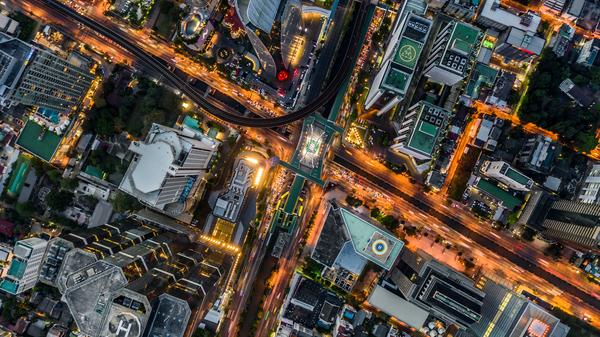
Congestion has patterns too. WSDOT counts Memorial Day, Labor Day, Thanksgiving, and Christmas as the busiest weekends on I-90 over the pass, so a Friday-afternoon drive east before a holiday is a gamble. Closer to Seattle, Eastside traffic near Bellevue builds at commute hours. Mountain weather can matter any time from fall through spring, and the next section covers it in full.
Ferry-dependent destinations
Washington's ferries need a vehicle reservation on only two routes. The state runs the largest vehicle and passenger ferry system in the country, according to Choose Washington State, and it works like a highway with a timetable and opinions about your arrival time. Ferries serve Puget Sound, the Kitsap and Olympic Peninsulas, Whidbey Island, and the San Juan Islands, on routes such as Seattle to Bainbridge Island, Edmonds to Kingston, Mukilteo to Clinton, Fauntleroy to Vashon and Southworth, Port Townsend to Coupeville, and Anacortes to the San Juans.
Vehicle reservations exist only for Anacortes/San Juan Islands and Port Townsend/Coupeville. Every other route runs first come, first served, and reservations cover vehicles only, so walk-on passengers just buy a ticket. Arrive 45 to 60 minutes before a reserved San Juan sailing and 30 to 45 minutes before a Port Townsend/Coupeville sailing.
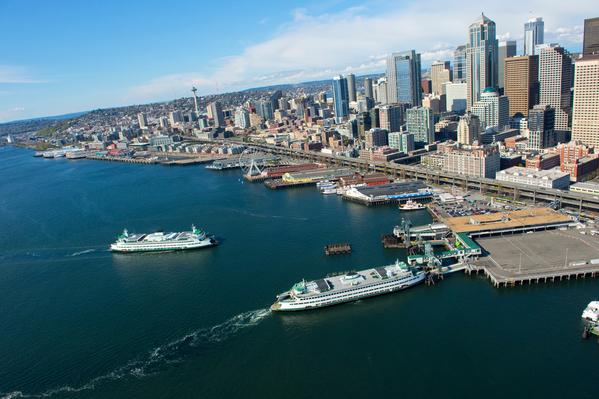
Plan for buffer. Ferry cost is moderate, but vehicle fares run higher than walk-on fares, and weather, vessel availability, and peak hours all move sailing times. A missed boat can cost you the next sailing, which on a busy route can mean a long wait. WSDOT publishes separate sailing schedules by season, with reservations opening ahead of each one, so check the schedule for your travel date instead of assuming last season's times still apply. WSDOT's app shows sailing times and drive-up space, which helps when a route is running late.
Planning business travel across the Cascades
The Cascades are why Washington feels like two states, and why Washington state business travel routes come with a weather forecast. Crossing them adds hours, risk, and a surprising number of rules about your tires. This section covers how to read pass conditions, when to pad your schedule, and when to skip the mountains entirely.
Mountain-pass conditions and seasonal planning
Check WSDOT before every winter crossing of Snoqualmie Pass, carry chains, and add buffer time. The pass tops out at 3,022 feet, and winter makes sure you notice. Requirements escalate in steps. Traction tires are advised first, then required for passenger vehicles, and finally chains are required on all vehicles, even 4WD and AWD, which WSDOT treats as the last step before a closure. WSDOT recommends carrying chains and approved traction tires through the winter, especially from Nov. 1 through March 31.
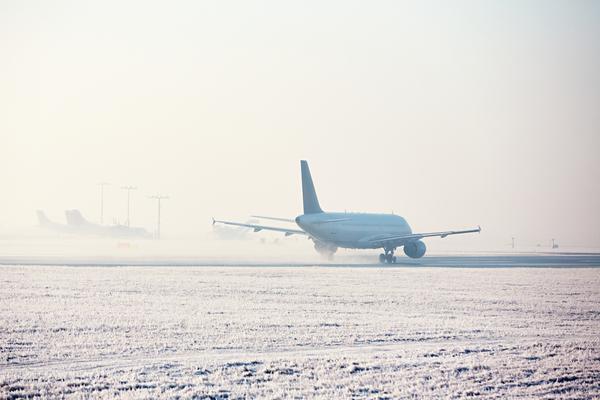
Check conditions before you leave and again on the road. WSDOT's mountain pass page shows current restrictions, closures, and cameras for Snoqualmie and the other passes. For winter trips, add at least an hour or two of buffer, avoid hard-start meetings the morning after a storm, and ask your rental company about winter tires and chain policies before you commit. If I-90 closes, US 2 over Stevens Pass is another option, though it has winter rules of its own. When the schedule can't absorb a delay, fly. A closed pass doesn't ground a plane.
Planning separate eastern and western Washington legs
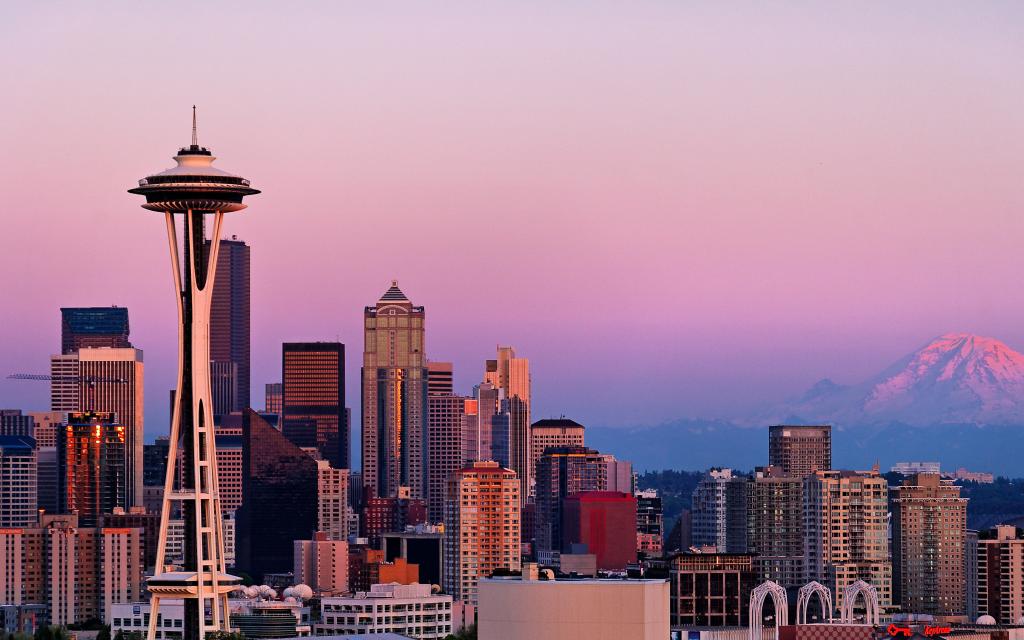
Treat eastern and western Washington as separate legs, and fly between them. They behave like two separate trips, so group meetings by geography first. Seattle, the Eastside, Tacoma, and Everett belong in one leg, and Spokane, the Tri-Cities, and other eastern stops belong in another. Within a leg, match the mode to the district and meeting location: light rail or rideshare for dense urban stops, a rental car or car service for suburban and eastern ones.
Between legs, the Seattle-Spokane hop is short, both cities share Pacific time, and you won't lose a minute to clock math. Pick up a rental car in Spokane, since distances stretch quickly once you leave downtown. If you do drive across, schedule the crossing for the first half of the day and keep the afternoon open for the mountain to change its mind.
Comparing transportation options across WA
Choosing the best mode of transportation
The best mode depends on the route. Getting around Washington state for business has no single winner, and the right choice depends on whether your trip is urban, suburban, cross-state, or ferry-dependent. Think of the table as a menu where every dish comes with a catch, and adjust for your meeting times and stops.
| Mode | Best for | Considerations |
| Rail (includes Link light rail, Sounder, and Amtrak) | Predictable timing inside Puget Sound, airport to downtown, and Seattle to the Eastside. | Amtrak takes about eight hours from Seattle to Spokane, so flying is usually the better option on that route. The 2 Line Crosslake Connection opened March 28, 2026, so Link now runs Seattle to Bellevue and Redmond directly. |
| Ferry | Getting to the Kitsap and Olympic Peninsulas, Puget Sound, and the San Juans. | Costs are moderate, and vehicle fares run higher than walk-on fares. Weather, vessel availability, and peak hours affect sailings, so watch arrival times. |
| Air | Seattle to Spokane (about an hour) and out-of-state trips. | Highest cost per trip, but it saves the most time. Winter weather can cause delays, smaller airports have fewer flights (with connections at Sea-Tac), and you’ll usually need a rental car after you land. |
| Car | Multistop itineraries and suburban meetings. | Fuel and parking costs, traffic, pass closures, tire chain requirements in winter, and highway congestion all add up. |
| Bus | Budget intercity travel and express routes to Seattle. | Pass conditions, traffic, and limited schedules can affect timing. |
When to fly instead of drive
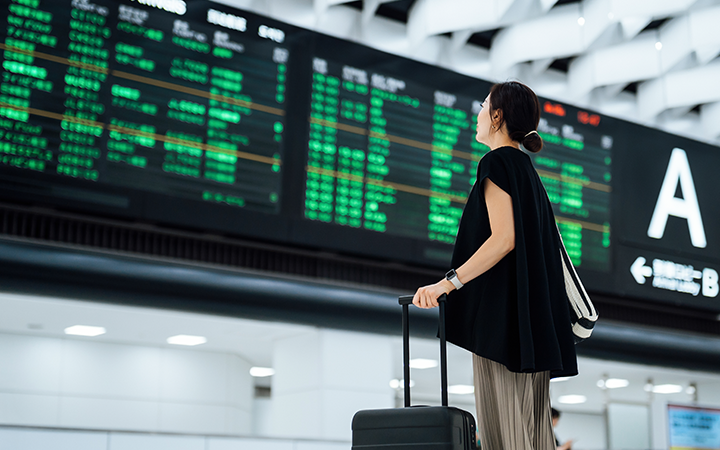
Fly when the trip is long, the stakes are high, or the schedule is tight. Seattle to Spokane business travel is the classic case: a short flight versus a long drive with Snoqualmie Pass and winter weather in the middle. Fly when mountain passes or weather could delay you, and when you have many stops in a short period, since a driving day can swallow the whole agenda.
Skip the flight for most trips in western Washington. Seattle to Tacoma business travel, along with trips to Bellevue and the Puget Sound cities, rarely calls for a plane, and a drive, a light rail ride, or an express bus will beat the security line almost every time. Out-of-state trips make a better case for flying, such as the roughly 2¾ hours to Los Angeles or five hours to New York, though you'll need to get to Sea-Tac first.
Getting from Seattle to major business districts
Most Seattle business travel routes start at Sea-Tac or downtown Seattle and fan out from there. Three destinations come up most: Bellevue across Lake Washington, Tacoma down I-5, and Spokane across the mountains. Each calls for a different move, and each has a tipping point where the obvious choice stops being the smart one.
Getting from Sea-Tac into the region
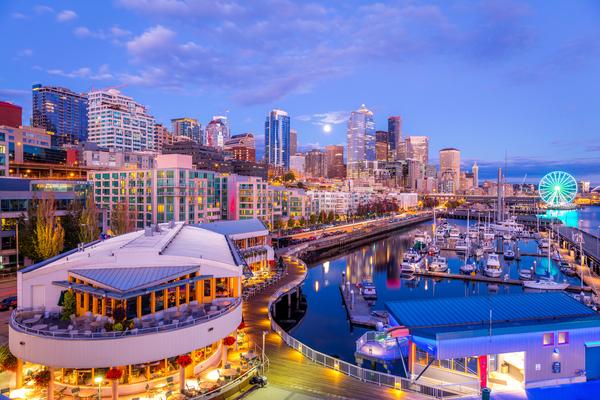
Light rail is the most predictable way from Sea-Tac to downtown Seattle, and a pre-booked car service suits groups and tight schedules. Business travel from Seattle-Tacoma Airport comes down to five options: light rail, rideshare, taxi, car service, or rental car. The best pick depends on where you're going and how many stops you have. Light rail is the steadiest option for downtown Seattle, and Link now runs to Federal Way, about 16 minutes from the airport. For Bellevue and Redmond, ride the 1 Line to International District/Chinatown and transfer to the 2 Line. Rideshare and taxis suit travelers with luggage and one destination, and a pre-booked car service suits executives and anyone on a tight clock.
Groups and multistop days along I-5 are a different animal. If your team is heading south toward Tacoma or north toward Everett with several stops, a pre-booked van or car beats juggling individual rides, and Corporate Traveler can arrange transfers and pickups. Driving yourself works too, though the rental car facility sits off site, so budget a shuttle ride to reach it.
Seattle to Bellevue
Take light rail from Seattle to Bellevue when timing matters. Bellevue sits across Lake Washington from Seattle and is known for corporate offices and the Meydenbauer Center for conventions. It's the most common Seattle-to-Eastside run, and it got easier. Seattle to Bellevue business travel now comes with real options: rail, bus, rideshare, and car.

Light rail, bus, or car?
Light rail is the headline. Since the 2 Line Crosslake Connection opened, Link has run directly between Seattle and Bellevue and Redmond, and 26 minutes is Sound Transit's estimate for the ride from Bellevue to Westlake Station, as reported by KING 5. That predictability is hard to beat when your first meeting has a start time.
Driving means picking a bridge. SR 520 is tolled, so set up a Good To Go account before you cross, while the I-90 bridge has no toll. Buses cross the lake too, so check current routes. Choose light rail for downtown-to-downtown trips with one or two stops, rideshare for door-to-door travel with luggage, and a car when your Eastside day sprawls across several offices.

Eastside travel tips & traffic considerations
Cross-lake traffic is the wildcard in Seattle to Bellevue business travel. The crossing itself is short, but the approaches to both floating bridges can crawl at rush hour, so assume about an hour door to door by car at peak and allow extra time when you schedule Seattle and Eastside meetings in the same day. Avoid stacking a 9 a.m. in Seattle with a 10:30 a.m. in Bellevue unless you're riding light rail, and cluster meetings by side of the lake whenever you can.
Seattle to Tacoma
Drive, ride an express bus, or take Sounder from Seattle to Tacoma, and skip the plane. The two cities sit about 30 miles apart, so ground travel wins, and I-5 treats those 30 miles as a suggestion at rush hour. For Seattle to Tacoma business travel built around Tacoma, you can still fly into Sea-Tac and head south by ground. The trick is choosing the right ground option for your clock.

Express bus, driving, or commuter rail?
Three ground options compete. Driving is the most flexible for multistop days. Sound Transit Express buses connect Tacoma and Seattle on Routes 590 and 594, and Route 594 runs all day, though Sound Transit has been adjusting bus routes around the Federal Way extension, so confirm schedules before you build an itinerary around one.
Sounder S Line commuter rail runs mainly in the peak direction on weekdays, with a few reverse-peak trips. That makes it a strong pick for a morning ride to Seattle and an afternoon ride back to Tacoma, and a weak pick for the reverse. From Sea-Tac, Link's 1 Line ends at Federal Way, short of Tacoma, so the last stretch is a bus or a car.
Pierce County travel tips & traffic considerations
Buffer time is the whole game in Seattle to Tacoma business travel. Local commute estimates put the drive at about 36 to 45 minutes in light traffic, 45 to 70 minutes on a typical weekday, and 75 to 90 minutes in heavy traffic. As a rule of thumb, allow 60 minutes midday and late evening, 90 minutes during the morning and afternoon peaks, and two hours when rain, a crash, or a Friday evening is in play. If a meeting starts right at peak, pair it with Sounder or an express bus, or give it extra margin. Traffic funnels around the Tacoma Dome and the bridges, so keep SR 509 or SR 99 in mind as a backup for the northern stretch.
Seattle to Spokane
Fly from Seattle to Spokane for most business trips. It's the longest regular business hop in the state, and the mountain range gets a vote. Match your mode to your meeting times, the first and last flights available, the pass forecast, and how mobile you'll be once you land. Seattle to Spokane business travel runs best by air, and the other modes have narrower sweet spots.

Flight, bus, rail, or car?
Flying wins for most trips. Nonstops take about an hour, and you skip the pass entirely. Driving takes about 4¼ hours in clear conditions and much longer in bad ones. Amtrak's Empire Builder takes about eight hours, and published schedules show it leaving Seattle late in the afternoon and arriving in Spokane after midnight, so verify with Amtrak before you plan around it. Intercity buses run on limited schedules and share the same pass conditions as drivers.
When is a same-day Seattle-Spokane trip practical? When your meetings sit near the airport or downtown Spokane, you can catch an early flight out and a late flight back, and your agenda has slack for a delay. Check first and last flight times before you commit, because a missed last flight turns a day trip into an overnight.
Eastern Washington travel tips & traffic considerations
What happens after you land matters as much as how you got there, so treat Spokane International Airport transportation as step one of the plan. Downtown Spokane is compact and walkable, but distances stretch fast beyond it, and rideshare and transit thin out past the central core. Plan on a rental car or car service if your meetings spread across the Spokane Valley, Liberty Lake, or beyond, and watch the gaps between stops, since a quick drive in eastern Washington can mean real miles. Traffic runs lighter than around Seattle, but winter weather and pass conditions still shape travel to and from the west, so keep the buffer habit on the trip home.
How to manage frequent business travel across WA
A team that works Washington state business travel routes every month shouldn't solve the same puzzle every time, and your spreadsheet of routes has earned its retirement. Corporate Traveler turns those puzzles into policy, pairing dedicated Travel Managers with Melon, our booking and reporting platform. The same route-first thinking runs through the guides in our resource hub, and these five pieces show how it works in Washington.

Planning routes by location & frequency
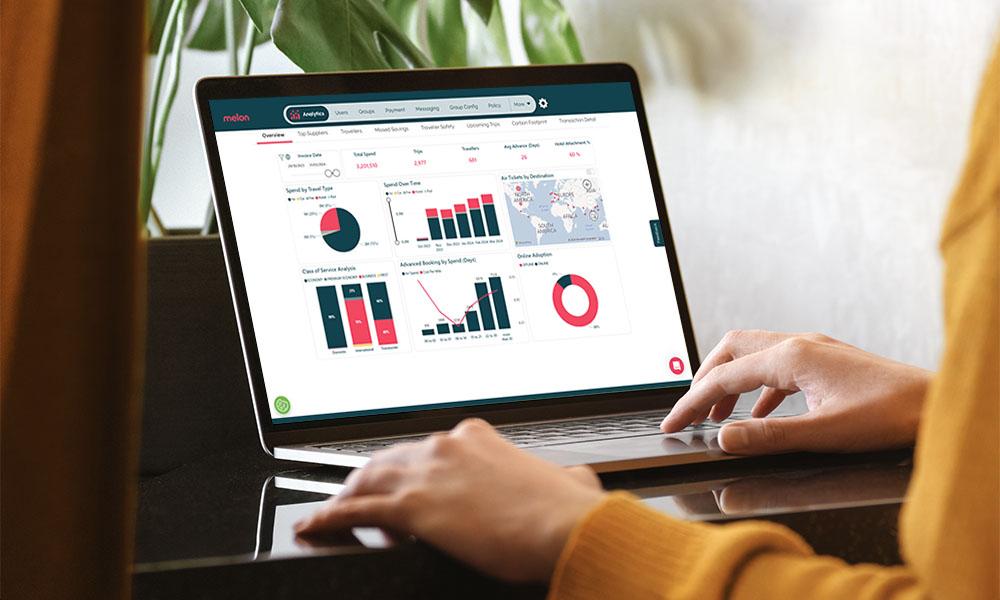
Start with where your people really go. If most trips run from Seattle to the Eastside, lean on light rail and rideshare. If a few go from Seattle to Spokane every week, you're a flight-and-rental-car program, and the Tri-Cities add another leg. Melon's reporting puts travel and finance data in one place, so your Travel Manager can review where your trips cluster and plan around them.

Selecting transportation and booking policies by route
Different routes deserve different rules. A sensible Washington policy might default to light rail or rideshare inside Puget Sound, allow rental cars for eastern Washington, and require flights for Seattle to Spokane when the pass forecast looks rough. Set those rules once in Melon, along with spending limits and approval steps, and they show up right where your people book.

Preferred carriers and corporate fares
Carriers follow hubs, and the same five airlines dominate our data for Sea-Tac and California flights. Build your preferred-carrier list around the routes your people really fly, and ask your Travel Manager about negotiated fares where available. Those fares are one slice of corporate travel discounts, and a clear preferred list keeps bookings consistent.
Managing cost, flexibility, and duty of care
Washington adds its own wrinkles. Mountain closures, ferry cancellations, and winter weather all show up on the itinerary. Melon's Recommended Spend feature nudges bookers toward options that fit the budget, flexible fares can protect trips that hinge on a pass or a ferry, and traveler tracking with a duty of care dashboard shows where your people are when plans change. If something goes sideways in the Cascades at 9 p.m., real people answer by phone and live chat, around the clock.

How Corporate Traveler can help you manage it all
With Corporate Traveler, you get a dedicated Travel Manager, 24/7 phone and live chat support, and Customer Success Consultants who review how your program is performing, all part of our business travel services. Our local, Seattle-based team brings top-tier expertise in Washington state business travel. Add Melon for booking, approvals, and reporting, and the route math that used to live in one person’s head moves into your program.
Simplify business travel in Washington state
Washington throws mountain passes, ferry schedules, and 4¼-hour drives at your itinerary. Corporate Traveler throws back a Travel Manager, 24/7 support, and a plan. Tell us where your people go, and we'll build a travel program that matches airports, ground transportation, policies, and support to the way your team moves.

Related resources


Frequently asked questions
-
What are Washington's main business travel corridors?
I-5 is the main north-south corridor, running from the Canadian border to California and linking Everett, Seattle, and Tacoma. I-405 serves the Eastside, and I-90 is the main cross-state link from Seattle through Bellevue and Snoqualmie Pass to Spokane. US 2, US 12, and SR 20 also cross the Cascades, and ferries connect Puget Sound islands and peninsulas.
-
Which airport should I fly into for business in Washington?
Choose Sea-Tac (SEA) for Seattle, Bellevue, Tacoma, and most western Washington trips, because it has the most flights and the best rebooking options. Choose Spokane International (GEG) for Spokane and the Inland Northwest, and Tri-Cities (PSC) for Pasco, Kennewick, and Richland. Paine Field (PAE) works when Alaska's schedule matches your route, and Bellingham (BLI) suits trips north of Seattle, with Bellingham airport transportation that includes Whatcom Transportation Authority buses and a shuttle to Sea-Tac.
-
How do I plan around Snoqualmie Pass in winter?
Check WSDOT's mountain pass page before you leave and again during the trip. Carry chains and approved traction tires from Nov. 1 through March 31, and build in extra buffer time for closures and delays. If I-90 closes, US 2 over Stevens Pass is another option, but it has its own winter rules. For time-critical trips, fly from Seattle to Spokane instead.
-
When is a same-day Seattle-Spokane business trip practical?
Seattle to Spokane business travel works as a day trip when your meetings are near the Spokane airport or downtown, you can take an early flight out and a late flight back, and your agenda has slack for delays. The flight takes about an hour, and both cities share Pacific time. Confirm first and last flight times, and book a rental car if you'll leave the downtown core.
-
When should business travelers fly instead of drive within Washington?
Fly when the trip is long, such as Seattle to Spokane, when mountain passes or weather could cause delays, or when you have many stops in a short period. For most trips from Seattle to Tacoma, Bellevue, or the Puget Sound cities, driving, rail, or bus is faster and simpler than flying.
-
Do Washington State Ferries require reservations?
Only on two routes. Vehicle reservations are available for Anacortes/San Juan Islands and Port Townsend/Coupeville, and WSDOT strongly recommends them there. All other routes are first come, first served, and walk-on passengers don't need reservations on any route. Arrive 45 to 60 minutes early for San Juan sailings and 30 to 45 minutes early for Port Townsend/Coupeville.
-
Can I do business travel in Washington without renting a car?
Yes, in many places. Link light rail connects Sea-Tac, downtown Seattle, Bellevue, and Redmond, and Sounder or express buses link Seattle and Tacoma. Ferries accept walk-on passengers. In Spokane, downtown is walkable and Spokane International Airport transportation includes rideshare and a Spokane Transit Authority bus, but rideshare and transit thin out beyond the central core, so a rental car or car service is usually needed for wider trips.
-
How should I plan a trip that covers both eastern and western Washington?
Plan it as two legs. Group western stops (Seattle, the Eastside, Tacoma, and Everett) together and eastern stops (Spokane and the Tri-Cities) together, then fly between them instead of driving over the Cascades. Rent a car on the eastern side, schedule any crossing early in the day, and keep a flight through Sea-Tac as a backup for weather or pass closures.
-
How can a travel management company help with business travel in Washington?
A travel management company simplifies planning, booking, and duty of care across all of these routes. Corporate Traveler pairs you with a dedicated Travel Manager, offers 24/7 support by phone and live chat, and provides Melon for booking, policy controls, approvals, reporting, and traveler tracking.