
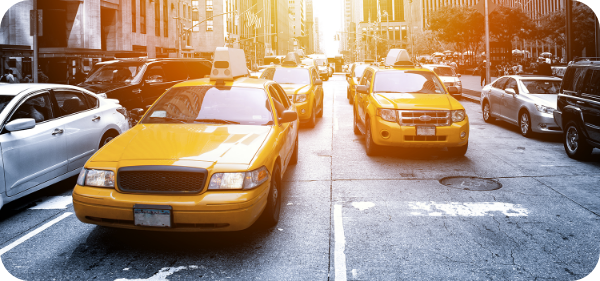
Business traveler’s guide to New York
Heading to New York City for work? This guide helps you plan a successful New York business trip, with practical advice on choosing the right airport, where to stay, getting around and planning meetings that start on time.
Published: Oct 7th, 2026
Key takeaways:
Whatever you need to do for business in New York City, it can deliver. Global banks, media companies, tech startups, law firms, and just about every other industry you can think of has a solid base in the city and its surrounding communities.
But success in New York requires a game plan. Book early to give yourself more flight and hotel options, and look for flexible fares and room rates so you can adjust when a meeting moves or a flight is delayed.
Here’s what to keep in mind:
- Choose your NYC airport based on your best flight option combined with your meeting location. JFK is suited to international trips, LaGuardia to domestic travel, and Newark to New Jersey or Midtown West locations.
- Your hotel should be nearby your meetings or a major transit hub to cut travel time and make it easier to get between appointments.
- Walking, the subway, and occasional taxis or car services are better options than renting a car, and cover most business trips very well in Manhattan
- Leave time between meetings and check transport alerts, weather, and major events before heading out. Trust us, it will take longer than you think.
- Compare PATH and NJ Transit for New Jersey meetings, and Metro-North or Amtrak for trips to Connecticut.
- Choose client dining and networking venues near your meetings, with a setting that suits the conversation.
What are New York’s main business districts?
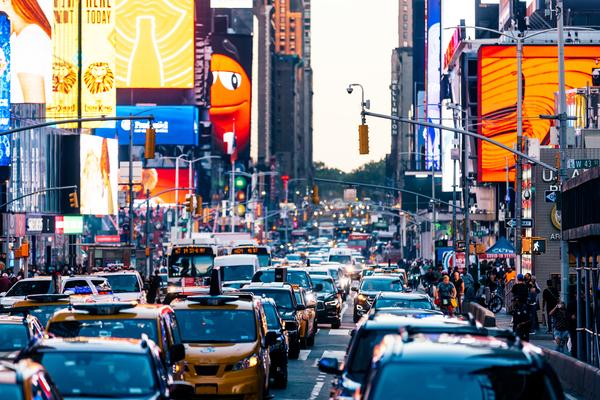
They don’t call it The Big Apple for nothing. New York City is very big, with more than 8 million people calling it home. You'll be rubbing shoulders with top lawyers, bankers, marketers, creatives, and experts from every field imaginable.
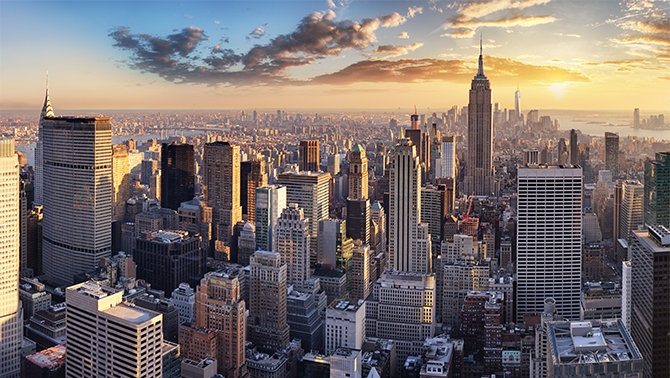
There are five boroughs in New York City, but most business travel happens in these four Manhattan districts:
- Midtown
- Flatiron and NoMad
- Chelsea and Hudson Yards
- Lower Manhattan
Knowing the district your meetings will be in makes it much easier to decide where to stay and how to get around.
-
Midtown Manhattan
Midtown is New York's largest business district and the one most people picture when they think of the city. Finance, professional services, media, and consulting firms all have a big presence here.
Grand Central Terminal is Midtown's main transport hub. Metro-North trains run from here to Westchester and Connecticut, the Long Island Rail Road arrives at Grand Central Madison beneath the terminal, and several subway lines stop here too. That makes Midtown an easy base when your trip includes meetings outside the city.
-
Flatiron and NoMad
Flatiron and NoMad (short for "North of Madison Square Park") are south of Midtown and have a more creative feel. New York's tech scene took off here in the 1990s, earning it the nickname “Silicon Alley”. Plenty of tech startups, creative agencies, professional services firms, and media outlets call it home.
You’ll see converted loft offices, coworking spaces, and no shortage of good coffee shops for your time between meetings.
Subway stations along Broadway, Park Avenue South, and Sixth Avenue keep the area well connected.
-
Chelsea and Hudson Yards
Manhattan's west side mixes big corporate offices with a strong tech and media presence. Hudson Yards is one of the city's newest business districts, with towers housing some of the biggest tech and professional services firms.
You’ll find the Javits Center, New York's main convention center, at the edge of Hudson Yards.
Penn Station and the Moynihan Train Hall anchor the area. Amtrak, NJ Transit, and the Long Island Rail Road all run from here, making Chelsea and Hudson Yards a perfect base for meetings in New Jersey or trips along the Northeast Corridor.
-
Lower Manhattan and the Financial District
Lower Manhattan is home to Wall Street, the New York Stock Exchange, and the World Trade Center. It’s no surprise that banks, financiers, insurers, and law firms fill the towers around Wall Street and nearby Battery Park City.
Getting there is easy. The Fulton Center and World Trade Center transit hubs connect many subway lines, and PATH trains run from the World Trade Center to Jersey City, Hoboken, and Newark.
-
Finding your feet
Getting your bearings in Manhattan is easier than you might think. Most of the island above 14th Street follows a grid. Numbered streets run east to west and go up as you go north. The avenues run north to south. Fifth Avenue splits the east side from the west side, so an address on East 45th Street is east of Fifth Avenue and one on West 45th is west. Central Park, which runs from 59th Street to 110th Street, is a great landmark to help you find your feet. You can’t miss it!
The grid gets less organized below 14th Street in Greenwich Village, SoHo, and the Financial District. Those older, winding streets might require your favorite mobile map app.
Which New York airport is best for business travel?
The best airport depends on where your meetings are and where you're flying from. LaGuardia is usually the quickest choice for domestic flights into Midtown. JFK handles most long-haul international flights. Newark is often the most convenient for meetings in New Jersey and works well for Midtown West thanks to its direct rail link to Penn Station.
Think about ground time as well as flight time when you compare options. A cheaper or better-timed flight into the wrong airport can easily add an hour or more to your day.
John F. Kennedy International Airport
JFK, in Queens, is one of the busiest airports in the country and New York's main gateway for international and long-haul flights. It's the right pick when you're flying in from overseas or across the country. It's also the farthest of the three airports from Midtown.
JFK International Airport is in the middle of a big redevelopment, so allow extra time to get to and from the terminals.
Getting to Manhattan from JFK? You’ve got choices to make:
- AirTrain plus rail or subway: The AirTrain links every terminal to Jamaica and Howard Beach stations. The fare is $8.75, and you pay by tapping a contactless card or phone. The Long Island Rail Road runs from Jamaica to Penn Station or Grand Central Madison in about 20 minutes, or you can take the E, J or Z subway lines. The A train runs from Howard Beach. Plan on 45 to 60 minutes in total.
- Taxi: Yellow cabs charge a flat $70 fare between JFK and Manhattan. A $5 surcharge applies on weekdays from 4pm to 8pm, and state and congestion surcharges, tolls, and tip are extra.
- Rideshare: Uber and Lyft pick up from designated areas at each terminal. Prices change with demand and can climb well above the taxi fare at busy times.
- Car service: A pre-booked car is the most predictable option when you're traveling with colleagues, carrying a lot of luggage or heading straight to a meeting.
The drive into Midtown usually takes 40 to 60 minutes and can take much longer at rush hour. If you can, take the AirTrain.
LaGuardia Airport
LaGuardia is the closest airport to Midtown, about 9 miles away. LaGuardia is built for domestic business travel, with most flights being short and medium routes within the US. Delta and American run busy schedules out of LGA.
If you haven’t been to the airport in a while, take note! It’s nicer. The rebuilt terminals are much improved from the LaGuardia of old. But let’s be honest. Delays still stack up, particularly when there’s weather.
LaGuardia has no rail link, so you'll be on the road:

- Public transit: The LaGuardia Link Q70 bus is free. It runs nonstop from Terminals B and C to Jackson Heights-Roosevelt Avenue in about 15 minutes, where you can connect to multiple subway lines. The M60 bus runs from all terminals to Upper Manhattan for the standard $3 fare.
- Taxi: Taxis from LaGuardia are metered, so the fare depends on traffic. Tolls, surcharges, and tips are extra.
- Rideshare: Uber and Lyft pick up from designated areas at each terminal.
- Car service: When in doubt, a pre-booked car is a good option for early meetings or group travel.
The trip to midtown is around 20 minutes when the roads are clear. The same trip can take an hour or more at rush hour.
Newark Liberty International Airport
The best and worst thing about Newark? It's in New Jersey. That can mean a longer drive into Manhattan, but it also makes Newark (EWR) the obvious choice for meetings in New Jersey.
Newark is United's East Coast hub, with plenty of domestic and international flights, and its rail link to Penn Station makes it a strong option for Midtown West and Hudson Yards.
Here are your options for getting into Manhattan from Newark:

- Rail: The AirTrain connects the terminals to Newark Liberty International Airport Station. NJ Transit and Amtrak trains run from there to New York Penn Station in about 30 minutes. A NJ Transit ticket costs $17.50 and includes the AirTrain fee. Check service alerts and allow extra time.
- PATH: Heading to Lower Manhattan? Take NJ Transit one stop to Newark Penn Station and switch to the PATH train to the World Trade Center.
- Taxi: Taxis are dispatched from stands at each terminal, and fares vary by destination. Tolls and tips are extra.
- Rideshare and car service: Both are easy to find. The drive into Manhattan takes 30 to 60 minutes through the Holland or Lincoln Tunnel, depending on traffic.
Newark has seen flight caps and delays in recent years, so check your flight status before you head to the airport.
What is the best way to get around New York for business?
The subway and your feet are the fastest ways to get around Manhattan on most business trips. Taxis, rideshares, and car services fill the gaps, and regional rail connects you to the rest of the area.
Most business travelers never need a rental car. In fact, it’s discouraged. Driving in Manhattan is slow and parking is expensive. Vehicles entering Manhattan south of 60th Street also pay a congestion toll at busy times.
Save the rental car for trips outside the city. You’ll thank us later.

-
Subway
The cheapest, most efficient way to get around New York is underground. New York City's subway runs 24 hours a day and often beats a cab at rush hour.
Every ride costs $3, whether you're heading from the Bronx to Brooklyn or from Lower Manhattan to the Upper East Side. MetroCards have been replaced by contactless payment via card, phone, or smartwatch. Just tap to pay at the turnstile. You can also buy a reusable OMNY card at stations and many stores. Use the same card or device and your fares cap at $35 in any seven-day period. Every ride after that is free.
Plan your route with Google Maps, Citymapper, or the MTA's website and apps, which all show live service alerts. Weekend and late-night service changes are common, so check before you leave.
Here’s how to ride the NYC subway like a local:
- Check whether you need the uptown or downtown platform before you go down the stairs. Some stations have separate entrances for each direction.
- Express trains skip stops, so check the sign on the side of the train before boarding.
- Be courteous. Step aside to let people off, then move into the car.
- Build in extra time before important meetings. Maybe even a full hour. Delays and service changes happen often.
Some stations are quite old and not all have elevators. Check the MTA's list of accessible stations when you're traveling with luggage or need step-free access. Wide service gates at many stations make it easier to get through with bags.
-
Taxi, rideshare and car service
Yellow cabs, Uber, Lyft, and car services are easy to find across Manhattan. They make sense when you're carrying luggage or presentation materials, traveling as a group, heading somewhere the subway doesn't quite reach, or getting around late at night. A pre-booked car service also gives you a fixed pickup time and price, which helps on a tight schedule.
Sounds great. What’s the catch? Traffic.
Surface streets in Midtown and Lower Manhattan can slow to a crawl at rush hour, and a crosstown ride that takes 10 minutes mid-morning can take 30 or more at 5pm. Trips into Manhattan south of 60th Street also carry a small congestion charge on top of the fare.
The subway or a walk is often faster for short trips at busy times.
-
Rail
New York's rail stations connect you to the suburbs, nearby cities, and two of the three metro airports.
Penn Station and the Moynihan Train Hall, on the west side of Midtown, serve Amtrak, NJ Transit, and the Long Island Rail Road. Amtrak's Acela and Northeast Regional trains run from here to Boston, Philadelphia, and Washington, DC. For many of these trips the train beats flying, with city center to city center travel and no airport security lines.
Grand Central Terminal, on the east side, is home to Metro-North, which serves Westchester, the Hudson Valley, and Connecticut. Grand Central Madison, beneath the terminal, brings Long Island Rail Road service to the east side, so you can travel from Long Island or JFK (via Jamaica) straight to Midtown East.
Buy Metro-North and Long Island Rail Road tickets in advance through the MTA TrainTime app or at station machines. Tickets bought on board are more expensive.
How can business travelers get between New York, New Jersey, and Connecticut?
Regional rail is usually the easiest way to travel between New York, New Jersey, and Connecticut. PATH and NJ Transit trains connect Manhattan with New Jersey, Metro-North serves Connecticut, and Amtrak covers longer trips along the Northeast Corridor.
New Jersey: PATH trains run around the clock between Manhattan and New Jersey. Stations are along Sixth Avenue from 33rd Street down to Christopher Street, with another station at the World Trade Center. Trains reach Hoboken, Jersey City, and Newark in minutes. NJ Transit trains from Penn Station serve Newark, Secaucus, Princeton Junction and much of northern and central New Jersey.
You pay by tapping a contactless card or phone at the turnstile.
Connecticut: Metro-North's New Haven Line runs from Grand Central to Greenwich, Stamford, Norwalk, and New Haven. Express trains reach Stamford in about 50 minutes. Amtrak also runs from Penn Station to Stamford and New Haven, which can be quicker for some trips.
Rail beats driving. Usually: The train is almost always better for trips throughout the tri-state area. Bridge and tunnel tolls, the Manhattan congestion charge, parking costs, and unpredictable traffic can add up quickly.
Rail is more predictable at rush hour and you can get work done on the way. Driving makes more sense when you're visiting multiple suburban offices, or if your destination is not convenient to a station.
Make business travel to New York easier
A New York City business trip means juggling your busy meeting schedule with important travel logistics like flights, hotels, and trains in one of the busiest cities in the world.
Corporate Traveler’s got you covered. We bring everything together, with flights, hotels, and ground transportation booked simply, accurately, in one place. Every trip is aligned to your preferences and travel policy.
When plans change, you’ll get 24/7 support from real people who know New York City and know your business. Your team will spend less time on logistics and more time on the meetings that matter.
Where should business travelers stay in New York?
The best place to stay in New York for business is as close as possible to your meetings, office, or event venue.
Staying close to your meetings cuts travel time, lowers the risk of running late, and gives you more flexibility between appointments.
- Midtown: Centrally located and works great for most trips.
- Chelsea and Hudson Yards: Work well for Penn Station and events at the Javits Center.
- Lower Manhattan: Makes sense when your meetings are in the Financial District.
- Meetings across the city: Choose a hotel near a major subway hub or train station.

Location comes first, but these features matter on a business trip too:
- Reliable Wi-Fi and a proper in-room workspace
- Meeting rooms or a business center when you need to host clients
- Flexible cancellation, so a change of plans doesn't cost you
- Luggage storage for early arrivals and late departures
- Easy access to the subway or rail
Booking through a travel management company like Corporate Traveler can also get you corporate hotel rates and keep every stay within policy.
Our Travel Managers are New York City experts. They know which hotels work best for business travelers based on where you’re coming from, where you’re going, and what you need to get done. Here are a few of our favorite properties in the city:

-
Hilton New York Fashion District
The Hilton New York Fashion District is on West 26th Street near Seventh Avenue, putting you between Chelsea, Flatiron, and Penn Station. Did someone say chic? It has a restaurant, a rooftop cocktail lounge, a fitness center, and a business center. Hudson Yards and the Javits Center are a short ride away.
-
Conrad New York Downtown
Conrad New York Downtown is an all-suite hotel in Battery Park City, a short walk from the World Trade Center and Wall Street. Every room is a suite with space to spread out and work, which makes it a good fit for longer stays, and there's meeting space on site when you need to host clients.
-
11 Howard – SoHo
11 Howard is a boutique hotel on the edge of SoHo known for thoughtful design and warm, personal service. Its Library, a lounge and coworking space for guests, is a comfortable spot to catch up on email or hold an informal meeting. It's well placed for meetings in SoHo, Tribeca, and Lower Manhattan, with several subway lines close by at Canal Street.
-
1 Hotel Brooklyn Bridge
1 Hotel Brooklyn Bridge is across the East River in Brooklyn Bridge Park. It's a luxurious, eco-conscious hotel with sweeping views of the Manhattan skyline, a spa, and a well-equipped gym. It suits meetings in downtown Brooklyn, and Lower Manhattan is a short subway or ferry ride away.
-
Sixty Hotel – Lower East Side
Few hotels balance luxury with minimalism like Sixty Hotel. Sixty LES brings a minimalist, design-led feel to the Lower East Side, with skyline views from many rooms and a pool. It's a good fit when you want to be close to Lower Manhattan and SoHo but would rather spend your evenings in a neighborhood full of restaurants and bars.
A New Yorker’s schedule
Try to keep up! New Yorkers move fast. They talk fast, walk fast, eat fast, and do business fast. Their calendars? You guessed it. They fill up just as fast. Planning your days around that pace will help you get the most out of a short trip.
Try meeting in the mornings

Morning meetings can work well in New York. A breakfast meeting or early coffee lets you catch people before their day fills up. They aren't the only option, though. Plenty of New Yorkers are just as happy to meet over lunch, in the afternoon or for a drink after work, so ask your contacts what suits them.
Just leave enough time between appointments to travel across town, especially at rush hour. A walk along Hudson River Park or a coffee in one of Manhattan's many cafés can also make a nice change from a meeting room.
Plan your trip around conferences and networking events

New York hosts a busy calendar of conferences, trade shows and industry events, many of them at the Javits Center on the west side. Timing your trip around one of these lets you fit more meetings into fewer days, because clients, prospects and peers are often in town at the same time.
Major events affect the whole city.. Big conferences, the UN General Assembly in September, Fashion Week, and the holiday season all push hotel demand, and rooms can sell out fast.
Streets around event venues can also get badly congested. Planning a trip around a major event? Book your hotel early, choose one within walking distance or a short subway ride from the venue, and allow extra time.
How should business travelers prepare for delays and disruptions in New York?
Check conditions before you depart, build in extra time, and have a backup route in mind. Busy airports, congested streets, and a subway system that's more than a century old mean that a little preparation goes a long way in New York City.
- Check your flight: Look at your flight status on the day you travel and again before you leave for the airport. New York's airports are some of the busiest in the country, and Northeast weather can ripple through schedules quickly.
- Check rail and subway service: The MTA, NJ Transit, PATH, and Amtrak post live service alerts online and in their apps. Weekend and overnight work often means reroutes or suspended lines.
- Check traffic: Look at a navigation app before booking a taxi or rideshare, especially for airport trips.
- Have a plan B: Find a second way to reach your key meetings, just in case. Another subway line or a short cab ride may still get you there on time if your usual path is down. Know your rail and street options for airport trips too.
- Extra time when it counts: Add more travel time during snowstorms, heavy rain, and summer heat waves. Weather can slow the subway and snarl traffic. Do the same during major events, parades, the New York City Marathon, and the UN General Assembly when road closures are common. Don’t forget weekday rush hours.
A capable travel management company like Corporate Traveler helps too. Its 24/7 support team can rebook you when a flight is canceled or a train is suspended, keeping your trip on track while you focus on your business.
Where should business travelers eat with clients in New York?
The best spots for a client lunch or dinner combine good food with a setting where you can actually talk. These three restaurants do both, from a daily-changing menu in the South Village to a simple steak frites spot in Midtown East.

-
King Restaurant
King is appropriately found on King Street, just off Sixth Avenue on the SoHo side of the South Village. Its French and Italian menu changes every day, depending on what's in season, so there's always something new to try. The dining room is relaxed and intimate, which makes it a good choice for a client dinner where conversation matters.
-
Le Relais de Venise
Le Relais de Venise L'Entrecôte keeps things simple. There's one set menu: a green salad with walnuts, then steak frites with the restaurant's signature sauce, plus a long wine list. No menu decisions means more time to focus on the conversation. You'll find it on East 54th Street in Midtown East, close to many corporate offices.
-
L'Express
L'Express is a classic French bistro on Park Avenue South near Union Square, serving favorites like steak frites, mussels and cassoulet. It's open late, which makes it a reliable choice after an evening event or a late arrival.
Where can business travelers meet and network after hours in New York?
Hotel bars and rooftop lounges are some of the best places to network after hours in New York. They're comfortable, easy to find, and usually quiet enough for a proper conversation earlier in the evening.

-
Public Bar
The bars at PUBLIC, the Ian Schrager hotel on Chrystie Street in the Lower East Side, draw a stylish downtown crowd. The Roof, on the hotel's top floors, has sweeping skyline views and is a strong pick for drinks after a day of meetings downtown.
-
Refinery Rooftop Bar
Urban chic meets New York glam at Midtown’s Refinery Rooftop bar. On top of the Refinery Hotel on West 38th Street, it’s a Midtown favorite for after-work drinks. Expect handcrafted cocktails, views of the Empire State Building, and a retractable glass roof that keeps it open year-round.
-
Peak
Look up. Way up. You’ll find Peak on the 101st floor of 30 Hudson Yards, with some of the highest, most impressive views in the city. It's a short walk from the Javits Center and the Hudson Yards office towers, which makes it an easy choice for drinks with clients after a conference or a day of meetings on the west side. Reservations are a good idea.
Corporate Traveler: your ultimate New York business travel partner
New York is home for Corporate Traveler. Our team has firsthand knowledge of the city’s airports, routes, and travel options. We’ll help you create a business travel program that fits your meeting schedules, budget, and company policy. Whether you’re located in the city, or traveling here, you can spend less time sorting out the travel arrangements and more time focusing on your business. Wherever you need to move within the tri-state area, you’ve got a local partner behind you.
Let’s talk about how Corporate Traveler can help you take on New York City.
Frequently asked questions about business travel in New York
-
Which NYC airport is closest to Manhattan?
LaGuardia is the closest airport to Manhattan, about 8.6 miles from Midtown. The drive takes around 20 minutes in light traffic but can take an hour or more at rush hour. LaGuardia mainly handles domestic flights. JFK and Newark handle most international flights and both have rail connections to Manhattan.
-
Do business travelers need a car in New York City?
No. Most business travelers get around New York by subway, taxi, rideshare and on foot. Parking is expensive, traffic is slow and vehicles entering Manhattan south of 60th Street pay a congestion toll. A rental car only makes sense when you're visiting several suburban locations in one day.
-
Can you use contactless payment on the New York subway?
Yes. Tap a contactless bank card, phone, or smartwatch on the OMNY reader at the turnstile to pay the $3 fare. MetroCards are no longer sold. Use the same card or device every time and your fares cap at $35 in any seven-day period. More than that? It’s free.
-
How early should I leave for a business meeting in NYC?
Add at least 15 to 20 minutes to whatever your route planner suggests for trips within Manhattan, and more at rush hour, in bad weather, or during major events. Leave a bigger buffer on the day you fly in. Two hours or more between your scheduled landing and your first meeting is a sensible minimum.